- August 13, 2026
- Posted by: Tresmark
- Category:
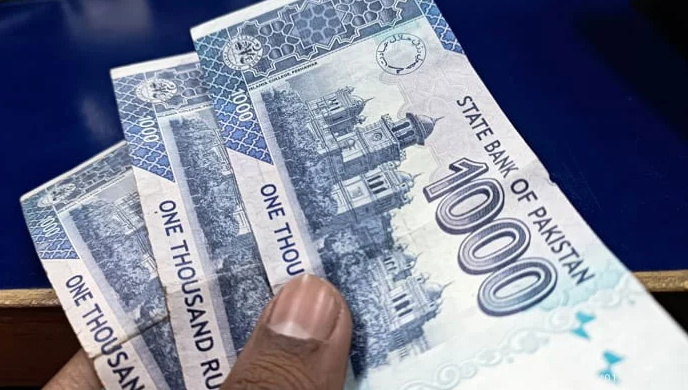
Pakistan has reportedly approached the United States for a $10 billion currency-swap or stabilisation facility through the US Treasury’s Exchange Stabilisation Fund. The request comes at a particularly sensitive time, as Washington is engaged in conflict with Iran while Islamabad has emerged as an important channel for communication between the United States and Tehran.
The reported proposal is still uncertain. Its structure, pricing, maturity, conditions and permitted uses have not been made public, and there is no guarantee that the facility will be approved or eventually drawn. Nevertheless, the request is significant because it highlights the growing connection between financial liquidity and geopolitical influence.
What a Currency Swap Actually Means
A bilateral swap arrangement is an agreement between two central institutions that allows one side to temporarily obtain another currency in exchange for its own.
If Pakistan needed dollars under such an arrangement, the State Bank of Pakistan could provide rupees and receive dollars under pre-agreed terms. Those dollars could potentially be used to support banks, meet external payment obligations, finance eligible imports or reduce pressure in the foreign-exchange market.
At maturity, Pakistan would return the dollars and receive its rupees back, along with any applicable interest or fees.
Therefore, a $10 billion swap line does not mean Pakistan immediately receives $10 billion in reserves. It represents access to a predetermined amount of liquidity if the facility is activated.
This distinction is particularly important because the reported US arrangement would involve the Treasury’s Exchange Stabilisation Fund rather than the Federal Reserve’s established central-bank swap network. Until official terms are released, it remains unclear whether the proposal would function as a conventional short-term swap, a balance-of-payments backstop or something closer to a stabilisation loan.
Why the US Dollar Matters
Currency-swap arrangements are more than technical financial mechanisms. They can also strengthen the influence of the currency provider.
The dollar remains at the centre of the global financial system. During periods of market stress, shortages of dollar liquidity can put pressure on banks, companies, governments and currencies around the world.
Providing dollar liquidity can therefore serve several purposes simultaneously. It can reduce financial instability, protect international financial relationships and reinforce confidence in the dollar-based system.
Historical experience also suggests that access to emergency dollar liquidity has not always been determined purely by economic need. During the 2008 global financial crisis, the Federal Reserve provided swap facilities to selected emerging markets, including Brazil, Mexico, Singapore and South Korea. Research has suggested that strategic relationships, financial integration and trust among policymakers also influenced access.
The broader lesson is straightforward: the global financial safety net is not completely neutral or universal. Relationships matter.
China’s Alternative Financial Network
Pakistan already has experience with a bilateral currency-swap arrangement through China.
China has expanded its own swap network significantly since the global financial crisis. These arrangements have helped promote the international use of the renminbi, facilitate trade and investment, and provide liquidity to partner economies.
For Pakistan, Chinese renminbi liquidity can be particularly useful for trade and financial obligations connected with China. However, it should not be treated as a direct substitute for unrestricted dollar reserves.
A major limitation is that much of Pakistan’s external debt and international trade remains linked to the dollar. Renminbi liquidity may therefore have to be converted into another currency, potentially creating additional costs and exchange-rate risks.
The key point is that different currencies solve different liquidity problems.
Pakistan Is Caught Between Two Monetary Networks
A US facility would place Pakistan in an interesting position.
On one side is the dollar-centred financial system led by the United States. On the other is an expanding China-centred financial network built around the renminbi.
Both systems offer Pakistan valuable financial insurance, but both also carry geopolitical implications.
For Washington, supporting Pakistan’s financial stability could strengthen a strategically important partner in a region connecting South Asia, China, Iran, Afghanistan and the Arabian Sea.
Pakistan’s role in facilitating communication between Washington and Tehran makes that strategic importance even greater during the current conflict.
For Islamabad, access to additional dollar liquidity could reduce concerns about external financing, strengthen market confidence and help manage temporary pressure on the rupee.
However, the timing should not automatically be interpreted as proof of a direct political bargain. There is currently no public evidence establishing that Washington has offered financial support in exchange for a specific Pakistani position on Iran, China or another foreign-policy issue.
Liquidity Is Not the Same as Development
The biggest risk is confusing temporary financial support with a permanent economic solution.
A swap facility can provide breathing room during a liquidity crisis, but it does not automatically increase Pakistan’s long-term earning capacity.
Pakistan’s recurring external-financing problems are linked to deeper structural issues, including a narrow export base, high energy costs, weak productivity and repeated cycles of import-driven growth.
A swap can buy time. It cannot replace economic reform.
There is also a difference between gross reserves and genuinely available reserves. If Pakistan draws on a swap, it creates a future repayment obligation. Repeated rollovers could eventually make what was intended as short-term liquidity look more like long-term borrowing.
That is why any future facility should be evaluated on the basis of its actual terms rather than its headline size.
What Pakistan Should Do
If the reported US proposal moves forward, Islamabad should establish a transparent framework for its use.
First, the government should disclose the key terms, including the legal structure, currency, interest rate, maturity, renewal conditions, permitted uses and drawdown requirements.
Second, swap facilities should be treated as emergency insurance rather than a source of routine financing. They should not be used to support unsustainable consumption or artificially defend the rupee.
Third, Pakistan should match each currency with the appropriate requirement. Renminbi liquidity can be particularly useful for China-related trade, while dollar liquidity is more valuable for dollar-denominated debt and broader foreign-exchange pressures.
Fourth, any temporary financial breathing space should be used to address structural weaknesses. Export competitiveness, energy-sector reform, productivity, investment and domestic revenue mobilisation should remain the focus.
Finally, Pakistan should maintain diversified financial relationships without allowing either Washington or Beijing to turn financial dependence into exclusive strategic influence.
The Bigger Picture
A potential $10 billion US facility could provide Pakistan with valuable financial insurance, just as its existing Chinese swap arrangement provides another source of liquidity.
But the real opportunity lies beyond the immediate reserve position.
Pakistan should use access to both financial networks to increase its policy options rather than deepen dependence on either one. The objective should be to move from repeated emergency financing towards a stronger external position based on exports, investment, productivity and sustainable growth.
The United States and China will continue to use financial relationships as instruments of geopolitical influence. Pakistan’s challenge is to ensure that access to their currencies serves Pakistan’s long-term economic development rather than simply financing the next crisis.