- September 30, 2026
- Posted by: Tresmark
- Category:
No Comments
Four Pakistani refineries have signed agreements with the government for major brownfield upgrades, but their detailed project plans are yet to be formally submitted to Inter State Gas Systems (ISGS).
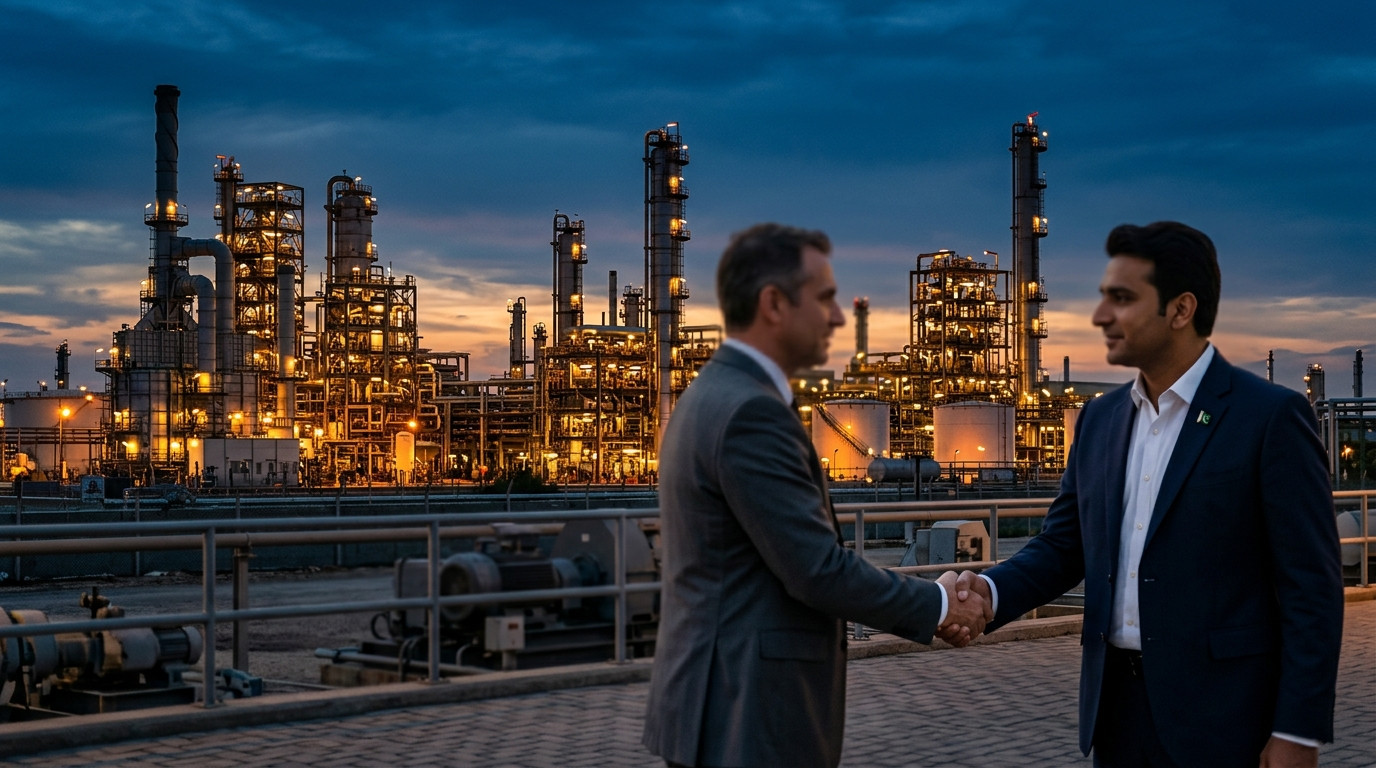
Attock Refinery (ARL), National Refinery (NRL), Pakistan Refinery (PRL) and Cnergyico Pakistan (CPL) signed the agreements on September 24, committing to investments focused on fuel-quality improvements, furnace-oil reduction, capacity expansion and higher production of refined fuels.
The projects are currently at different stages of feasibility and engineering work, with the companies completing feasibility studies and Front End Engineering Design (FEED) before submitting detailed plans to ISGS.
The four projects have a combined estimated investment of around $4.2 billion. Including PARCO’s proposed $600 million Green Fuel project, total investment across five planned refinery upgrades could reach approximately $4.8 billion.
The government’s refinery-upgrade programme is aimed at increasing Pakistan’s overall refining capacity from around 450,000 barrels per day (bpd) to 550,000 bpd, while shifting production towards higher-value fuels and reducing furnace-oil output.
ARL is planning a $600 million upgrade focused on improving fuel quality and its product mix. The project includes new naphtha treatment and reforming units and an upgrade of its diesel desulphurisation facility. ARL expects the project to increase motor gasoline production by around 25% and bring diesel production up to Euro-V standards.
PRL has outlined the largest investment among the four, with a proposed $1.8 billion project aimed at nearly eliminating furnace-oil production and doubling crude-processing capacity from 50,000 bpd to 100,000 bpd. The refinery is exploring Chinese financing, although the proposed funding structure requires a sovereign or PSO corporate guarantee.
NRL is evaluating a hybrid Green Fuel and Bottom-of-the-Barrel project estimated at $300 million to $800 million. A six-month feasibility study is underway to determine the final configuration. NRL is also considering increasing its crude-processing capacity from 50,000 bpd to around 70,000 bpd.
CPL is preparing a $1.2 billion upgrade programme to increase crude-processing capacity from approximately 156,000 bpd to 200,000 bpd. The project includes Green Fuel, Bottom-of-the-Barrel conversion and a new Single Point Mooring facility, while its Euro-V/VI component is already under development.
Meanwhile, PARCO has not yet signed its upgrade agreement but has indicated that it plans to do so before October 24. Its proposed $600 million Green Fuel project would further reduce furnace-oil production and upgrade gasoline and diesel quality from Euro-III to Euro-V standards.
Once completed, the refinery upgrades are projected to significantly alter Pakistan’s fuel production mix. Furnace-oil output is expected to decline from around 15,417 tonnes per day to 5,714 tonnes, while motor gasoline production could rise from 10,702 tonnes to 18,402 tonnes per day.
High-speed diesel production is also projected to increase from approximately 21,237 tonnes to 29,517 tonnes per day.
The next major step for the government is receiving the detailed project submissions from the four refineries. These documents will establish the final technical configurations, investment requirements, implementation timelines and expected changes in fuel production. Since the refineries are at different stages of engineering and feasibility work, their projects are expected to progress at different speeds.