- September 20, 2026
- Posted by: Tresmark
- Category:

Companies that operate across currencies face uncertainty when future payments or receipts are exposed to exchange rate movements. A change in the value of a currency can increase import costs, reduce export revenues, or affect the value of foreign currency debt.
FX forwards are one of the most commonly used tools for managing this uncertainty. They allow companies to agree today on an exchange rate for a currency transaction that will take place at a future date.
For CFOs and corporate treasury teams, understanding how FX forwards work is an important part of currency risk management, cash flow forecasting, and financial planning.
What Is an FX Forward?
An FX forward is an agreement between two parties to exchange a specified amount of one currency for another at a predetermined exchange rate on a future date.
Unlike a spot transaction, where currencies are exchanged immediately, an FX forward establishes the exchange rate in advance for a future transaction.
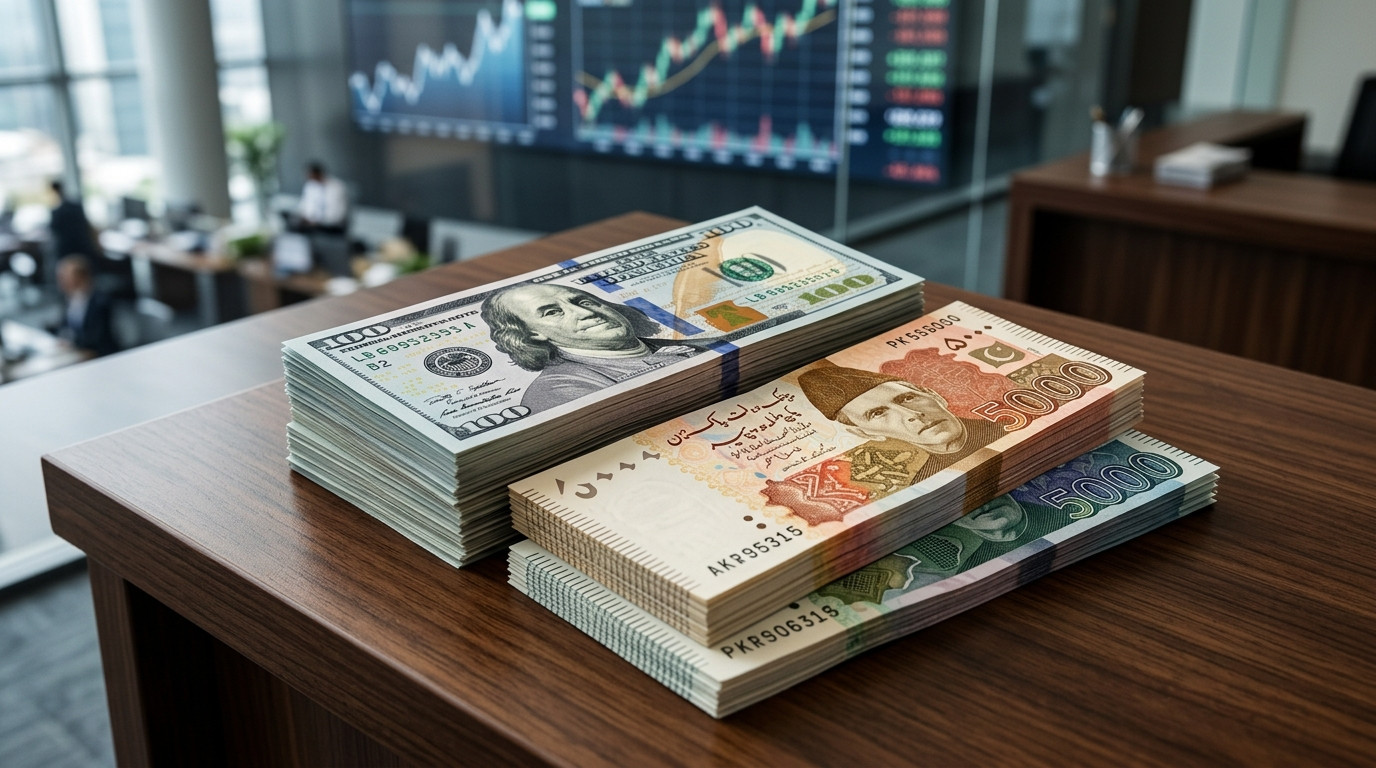
For example, a Pakistani importer expecting to pay a supplier USD 500,000 in three months could enter into an FX forward to purchase the dollars at an agreed rate for settlement in three months.
This provides greater certainty about the PKR cost of the future payment.
Why Companies Use FX Forwards
Currency markets can move significantly between the time a transaction is agreed and the time payment is made.
FX forwards can help companies:
- Reduce uncertainty around future currency costs
- Protect profit margins
- Improve cash flow forecasting
- Manage foreign currency exposure
- Support budgeting and financial planning
- Reduce the impact of adverse exchange rate movements
The primary objective is generally certainty and risk management, rather than trying to predict the direction of the currency market.
How an FX Forward Works
Consider a company that needs to pay a foreign supplier USD 1 million in 90 days.
The company is concerned that the USD could become more expensive against its local currency before the payment date.
It can enter into an FX forward to purchase USD 1 million at an agreed exchange rate for settlement in 90 days.
At maturity, the company purchases the agreed USD amount at the contracted rate.
This allows the company to know the approximate local currency cost of the payment in advance.
FX Forwards for Importers
Importers are often exposed to currency risk because their future payments are denominated in foreign currencies.
For example, a Pakistani company importing machinery, raw materials, or inventory may have a USD payment due several months later.
If the PKR weakens before the payment date, the company’s local currency cost increases.
An FX forward can help the company lock in an exchange rate and reduce uncertainty around the future payment.
FX Forwards for Exporters
FX forwards can also be useful for exporters.
An exporter expecting to receive USD in the future may face the risk that the dollar loses value against the company’s reporting currency before the payment is received.
By using an FX forward, the company can establish a future exchange rate for converting the expected foreign currency receipt.
This can make future revenue and cash flow projections more predictable.
FX Forwards and Foreign Currency Debt
Companies with foreign currency loans can also use FX forwards as part of their currency risk management strategy.
A business with future USD debt repayments, for example, may need to purchase USD periodically to service its obligations.
Treasury teams can evaluate forward contracts alongside debt maturities and expected foreign currency inflows to manage the company’s exposure.
FX Forwards and Cash Flow Forecasting
One of the key benefits of FX forwards is greater certainty around future cash flows.
Without hedging, a company may know that it needs to pay USD 2 million but may not know exactly how much that payment will cost in its reporting currency.
A forward contract can provide a predetermined exchange rate for the transaction, making the future cash requirement easier to incorporate into financial forecasts.
This can improve:
- Budgeting
- Working capital planning
- Cash flow forecasting
- Margin forecasting
- Treasury reporting
FX Forward vs. FX Swap
FX forwards and FX swaps are related but serve different purposes.
FX Forward:
Primarily involves agreeing today to exchange currencies at a future date. It is commonly used to hedge a known future FX exposure.
FX Swap:
Involves an initial currency exchange and a future reverse exchange. It is often used for short term currency funding and liquidity management.
The appropriate instrument depends on the company’s exposure, cash flow timing, liquidity requirements, and treasury policy.
FX Forward Rates and Market Data
Treasury teams need reliable market information when evaluating FX forwards.
Important indicators include:
- Spot exchange rates
- Forward exchange rates
- Interest rates
- FX swap rates
- Currency volatility
- Central bank policy
Monitoring these indicators helps treasury professionals understand market conditions and evaluate potential hedging costs.
For companies with significant FX exposure, access to timely USD/PKR rates and forward market data can support better hedging decisions.
FX Forwards for Pakistani Corporates
FX forwards can be particularly relevant for Pakistani businesses involved in imports, exports, international payments, and foreign currency financing.
Companies may have exposure to USD/PKR movements through supplier payments, export receipts, foreign currency loans, or overseas expenses.
Treasury teams can incorporate FX forwards into a broader currency risk management framework by matching expected exposures with appropriate hedge maturities.
For Pakistani corporates, monitoring USD/PKR, interest rates, KIBOR, and forward market conditions can provide useful context when evaluating FX hedging strategies.
Platforms such as Tresmark can help finance and treasury professionals monitor relevant FX and financial market data from a centralized environment.
Best Practices for Using FX Forwards
Companies should establish clear processes around FX hedging.
Key practices include:
- Identify exposures – Determine future foreign currency payments and receipts.
- Set hedging policies – Define which exposures can be hedged and within what limits.
- Match hedge maturity – Align the forward’s maturity with the expected cash flow.
- Monitor market rates – Track spot and forward FX rates regularly.
- Assess counterparty risk – Maintain appropriate limits for financial institutions.
- Review forecasts – Update expected currency requirements as business conditions change.
- Measure hedge performance – Regularly assess whether the hedging strategy is meeting its objectives.
Common Mistakes in FX Hedging
Companies can face problems when FX hedging is not aligned with their underlying exposures.
Common issues include:
- Hedging uncertain or inaccurate forecasts
- Using inappropriate hedge maturities
- Ignoring counterparty exposure
- Failing to update forecasts
- Treating hedging as a way to speculate on currency movements
- Not maintaining clear treasury policies
Effective FX risk management should be based on clearly identified business exposures.
Conclusion
FX forwards provide companies with a practical way to manage uncertainty around future foreign currency payments and receipts.
By agreeing on an exchange rate in advance, companies can improve cash flow visibility, budgeting, margin protection, and financial risk management.
For CFOs and treasury teams, FX forwards work best as part of a broader framework that combines accurate exposure forecasting, market data, appropriate hedging policies, and regular monitoring.
For businesses exposed to USD/PKR movements, effective use of FX forwards can be an important component of corporate treasury and currency risk management.
FAQs
What is an FX forward?
An FX forward is an agreement to exchange a specified amount of one currency for another at a predetermined rate on a future date.
How do FX forwards manage currency risk?
They can reduce uncertainty by establishing an exchange rate in advance for a future foreign currency payment or receipt.
Are FX forwards useful for importers?
Yes. Importers can use FX forwards to manage the risk that a foreign currency becomes more expensive before a scheduled supplier payment.
Can exporters use FX forwards?
Yes. Exporters can use forwards to manage uncertainty around the value of future foreign currency receipts.
What is the difference between an FX forward and an FX swap?
An FX forward generally involves a future currency exchange, while an FX swap involves an initial exchange followed by a reverse transaction at a future date.