- September 24, 2026
- Posted by: Tresmark
- Category:

Pakistan’s economic growth is expected to remain at 3.7% in the ongoing fiscal year 2027 (FY27) as the lingering effects of the Middle East conflict weigh on activity, while inflation is projected to rise to 8.3%, the Asian Development Bank (ADB) said.
The ADB, in its latest Asian Development Outlook for September, said higher energy and logistics costs and pressure on the exchange rate would complicate Pakistan’s economic recovery.
“Growth is projected to remain at 3.7% in FY2027 as lingering effects from the Middle East conflict dampen macroeconomic momentum,” said ADB.
The outlook noted that sustained performance under the International Monetary Fund’s (IMF) Extended Fund Facility (EFF) program, re-entry into international capital markets, and the July and August 2026 sovereign credit rating upgrades have collectively improved investor confidence and reduced financing costs from their FY2024 peak.
“Private investment is expected to be the primary demand driver, building on the 8.6% real expansion in FY2026,” it said.
It said tariff reductions on industrial inputs under the National Tariff Policy 2025-2030 and a lower corporate tax burden following a cut in the super tax should improve the investment climate.
However, household spending is likely to remain subdued with real incomes compressed by the pass-through of high global energy prices.
“Services are expected to remain resilient with information technology exports providing a strong basis, while manufacturing faces slower momentum as elevated energy prices raise production costs.
“Construction is expected to gain from budget incentives, including reduced property transaction taxes and a higher interest subsidy under the Prime Minister’s housing scheme,” it said.
The ADB forecast inflation at 8.3% in FY2027, above the central bank’s medium-term target range of 5%-7%.
“The projection assumes a gradual moderation of inflation from the June 2026 year-on-year rate of 11.1% and a return to the 5%–7% range in the second half of FY2027.
“Domestic fuel and logistics costs are expected to remain elevated in the first half of FY2027 amid ongoing disruptions to global energy supplies, while higher international fertiliser prices will raise agricultural input costs and food prices.
“A pickup in economic activity and rising import costs could exert pressure on the exchange rate, raising imported inflation,” the lender said.
ADB said the SBP faces a difficult trade-off between supporting growth and bringing inflation sustainably back to target, with the real policy rate having fallen close to zero by the end of FY2026.
The report highlighted that Pakistan’s FY2027 budget targets a consolidated fiscal deficit of 3.6% of GDP and an underlying primary surplus of 2%, in line with IMF programme targets.
FBR collections are targeted to grow by 17.6%, raising FBR taxes from 10.2% of GDP to 10.6%. “However, their revenue cost must be offset through improved compliance and enforcement, making the FBR target ambitious,” said ADB.
ADB also expect Pakistan’s current account deficit to widen amid heightened geopolitical tensions and recovering domestic demand.
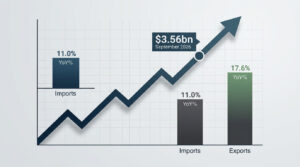
“Stronger import growth, driven by the manufacturing recovery and persistent frictions in global energy markets, including higher freight and insurance premiums, is expected to widen the trade deficit even as petroleum prices ease,” it said.
Source: BR