- September 7, 2026
- Posted by: Tresmark
- Category:
Corporate treasury is becoming increasingly technology driven as businesses manage currency volatility, changing interest rates, liquidity requirements, and growing financial complexity.
In 2026, modern treasury teams are moving beyond spreadsheets and manual reporting toward real time market data, AI, automation, cloud based platforms, API integration, and treasury dashboards.
The goal is simple: give CFOs and treasury professionals faster access to accurate financial information so they can manage liquidity, monitor risk, and make better decisions.
What Is Treasury Technology?
Treasury technology includes the software, financial data platforms, analytics tools, and automation systems used to manage corporate financial operations.
It can help treasury teams manage:
- Cash and liquidity
- FX exposure
- Interest rate risk
- Financial market data
- Cash flow forecasting
- Treasury reporting
- Financial risk
Modern treasury technology brings these activities together in a more centralized and automated environment.
Key Treasury Technology Trends in 2026
- Artificial Intelligence in Treasury
AI is becoming an important tool for corporate treasury teams. It can analyze large amounts of financial information and identify patterns that may require attention.
AI applications in treasury include:
- Cash flow forecasting
- Liquidity analysis
- Risk detection
- Market monitoring
- Anomaly detection
- Automated reporting
AI can help treasury professionals spend less time processing data and more time on financial analysis and decision making.
- Real Time Market Data
Real time financial market data is becoming increasingly important for treasury management.
Treasury teams may need to monitor:
- FX rates
- Interest rates
- Bond yields
- Money market rates
- Commodity prices
- Yield curves
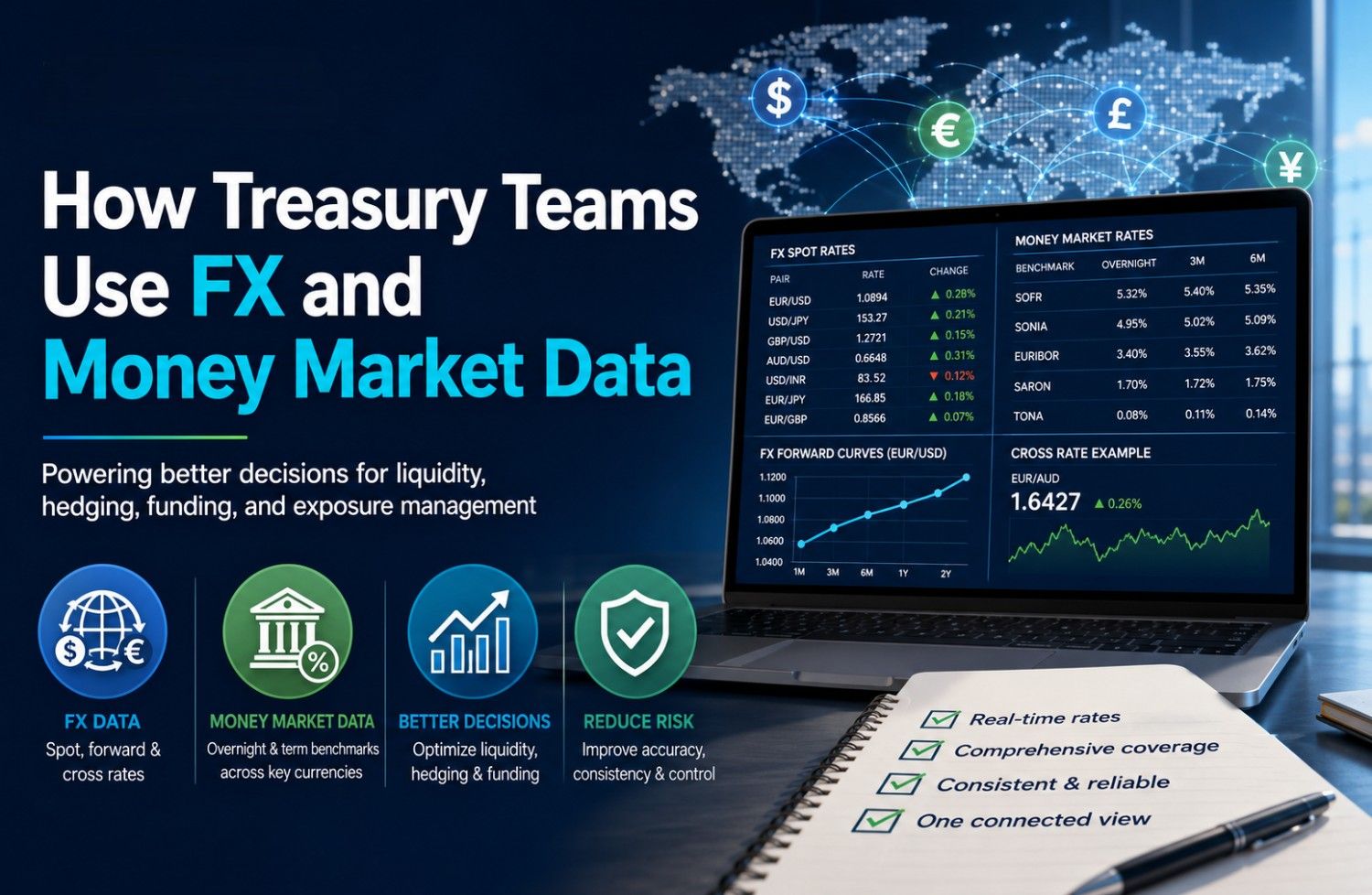
Access to timely market information helps finance teams understand changing market conditions and assess potential financial exposure.
For example, companies with significant USD exposure can monitor currency movements and evaluate how changes in FX markets could affect their financial position.
- Treasury Automation
Treasury automation can reduce repetitive manual tasks such as collecting market data, updating spreadsheets, preparing reports, and monitoring financial indicators.
Automation can help organizations:
- Reduce manual work
- Improve reporting efficiency
- Minimize errors
- Standardize processes
- Improve data consistency
This allows treasury teams to focus more on risk management, forecasting, and financial strategy.
- Cloud Based Treasury Platforms
Cloud based treasury technology provides centralized access to financial information and can make it easier for organizations to scale their financial operations.
Key benefits can include:
- Centralized financial data
- Easier access
- Scalability
- Faster deployment
- Improved collaboration
- Integration with other financial systems
For organizations with multiple locations or subsidiaries, cloud technology can also support a more consistent treasury environment.
- API Integration
API connectivity is becoming an important part of modern treasury technology.
Treasury platforms can connect with:
- ERP systems
- Banking platforms
- Treasury management systems
- Risk management systems
- Accounting software
- Market data platforms
This connectivity reduces the need for manual data transfers and can improve the speed and consistency of financial information.
- Treasury Dashboards and Analytics
Modern treasury dashboards provide a centralized view of important financial information.
A treasury dashboard may include:
- FX rates
- Interest rates
- Yield curves
- Liquidity indicators
- Cash positions
- Financial exposures
- Treasury KPIs
- Market alerts
Advanced analytics can help treasury teams understand cash flow trends, financial exposure, funding costs, and market movements.
A good treasury dashboard should focus on relevant information rather than displaying every available data point.
- Automated Financial Alerts
Financial markets can move quickly, making continuous manual monitoring difficult.
Automated alerts can notify treasury teams about:
- Significant FX movements
- Interest rate changes
- Yield movements
- Market volatility
- Threshold breaches
For example, a treasury team can set an alert when USD/PKR moves beyond a predefined level, allowing the team to review the situation without continuously monitoring the market.
- Smarter Cash Flow Forecasting
Cash flow forecasting remains one of the most important treasury functions.
Technology can combine information from bank accounts, ERP systems, receivables, payables, historical cash flows, and business forecasts.
Better forecasting can help companies make informed decisions about:
- Liquidity
- Borrowing
- Investments
- Working capital
- Funding requirements
AI and advanced analytics can further improve forecasting by identifying patterns in historical financial data.
Treasury Technology for Pakistani Corporates
Treasury technology can be particularly valuable for Pakistani companies that need to monitor both domestic and international markets.
Relevant financial information may include:
- USD/PKR
- KIBOR
- T Bills
- Pakistan Investment Bonds
- Sukuk
- Money market rates
- Interest rates
- Global FX markets
A centralized market data platform can help Pakistani CFOs and treasury teams monitor these markets from one environment and improve financial visibility.
How to Choose Treasury Technology in 2026
Before selecting a treasury technology platform, companies should evaluate:
Data Quality
Is the financial and market data reliable and timely?
Market Coverage
Does the platform cover the markets and instruments relevant to the business?
Automation
Can it reduce repetitive manual treasury processes?
Integration
Can it connect with ERP, banking, TMS, and other financial systems?
Dashboard & Analytics
Can users easily monitor important financial indicators?
Customization
Can treasury teams create relevant views, watchlists, and alerts?
Cost and Scalability
Can the platform support the organization’s current and future requirements?
The Future of Corporate Treasury Technology
Treasury technology is moving toward a more real time, automated, connected, and intelligent financial environment.
AI powered analytics, predictive forecasting, real time market data, automated workflows, and personalized dashboards are likely to become increasingly important.
The treasury function is therefore evolving from a traditional reporting role into a real time financial intelligence function.
Conclusion
Treasury technology in 2026 is focused on improving financial visibility, reducing manual work, and helping companies respond faster to changing market conditions.
The most important trends include AI, real time market data, treasury automation, cloud platforms, API integration, advanced analytics, treasury dashboards, automated alerts, and smarter cash forecasting.
For CFOs and treasury professionals, adopting the right technology can help improve liquidity management, financial risk monitoring, market visibility, and decision making.
Platforms such as Tresmark can support modern treasury teams with real time multi asset market data, financial analytics, customizable dashboards, and market monitoring tools.
Frequently Asked Questions
What is treasury technology?
Treasury technology refers to digital platforms and tools used to manage corporate cash, liquidity, financial markets, risk, forecasting, and treasury operations.
What are the main treasury technology trends in 2026?
The major trends include AI, real time market data, automation, cloud based platforms, API integration, advanced analytics, and centralized treasury dashboards.
How does AI help treasury teams?
AI can support cash flow forecasting, market monitoring, risk analysis, anomaly detection, and automated financial reporting.
Why is real time market data important for treasury?
Real time data helps treasury teams monitor FX rates, interest rates, bond yields, commodities, and other markets that may affect corporate financial exposure.
What should a treasury dashboard include?
A treasury dashboard can include FX rates, interest rates, yield curves, liquidity indicators, cash positions, financial exposures, market alerts, and treasury KPIs.
How can Pakistani companies use treasury technology?
Pakistani companies can use treasury technology to monitor markets such as USD/PKR, KIBOR, government securities, money markets, interest rates, and international FX markets.