- September 2, 2026
- Posted by: Tresmark
- Category:
As financial markets become increasingly data-driven, real-time connectivity has become an important requirement for modern trading and treasury operations. CFOs, treasury teams, financial institutions, and investment professionals rely on timely market information to monitor exposures, analyze opportunities, manage risk, and make informed decisions.
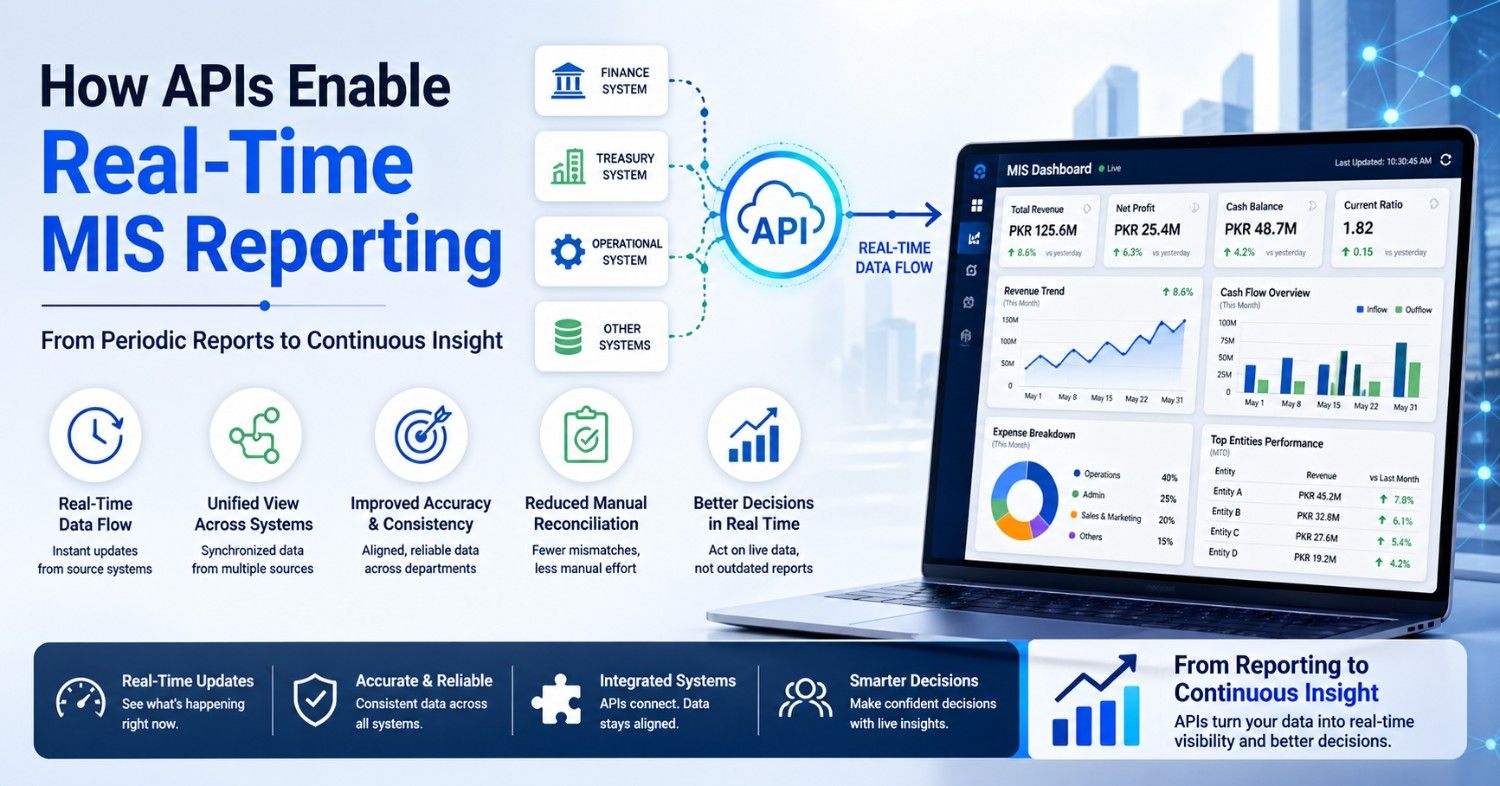
Financial APIs provide the connectivity required to link market data providers, trading applications, analytics platforms, and financial systems. By enabling automated data exchange between different applications, APIs can reduce manual processes, improve data accessibility, and support faster financial decision-making.
For modern trading applications, API integration is not simply a technical capability. It is an important component of building scalable, responsive, and data-driven financial operations.
What Are Financial APIs?
Financial APIs, or Application Programming Interfaces, allow software applications to communicate with financial systems and access financial data and services.
Depending on their purpose, financial APIs can connect trading applications with:
- Live market data feeds
● Pricing and valuation systems
● Order execution platforms
● Portfolio management systems
● Risk management tools
● Financial analytics platforms
For treasury teams and financial institutions, APIs provide a structured way to access and exchange financial information without relying on manual data collection.
This connectivity can help organizations create more automated and efficient financial workflows.
Why API Integration Matters for CFOs and Treasury Teams
Financial markets can change rapidly, making timely information critical for managing financial risk. Delayed or inaccurate data can affect trading decisions, liquidity management, portfolio valuations, and risk assessments.
API integration can help organizations achieve:
- Real-time access to financial market data
● Faster trading and decision-making
● Improved transparency across financial operations
● Reduced manual data processing
● Better connectivity between financial systems
For CFOs, this can improve visibility into liquidity, market exposure, investment positions, and broader financial operations.
Key Components of Financial API Integration
Successful API integration typically involves several components that work together to connect financial data, analysis, and trading activity.
Market Data APIs
Market data APIs provide applications with access to real-time and historical financial information.
Depending on the provider, this data can include:
- Foreign exchange (FX) rates
● Equity prices
● Fixed-income data
● Commodity prices
● Interest rates and yield curves
Market data APIs form the foundation of many trading applications because they provide the information required for pricing, analysis, monitoring, and decision-making.
Trading and Execution APIs
Trading and execution APIs connect applications directly with order management and execution systems.
These APIs can allow applications to:
- Create and manage orders
● Execute trades
● Monitor order status
● Retrieve transaction information
● Manage trading workflows
By connecting market data with execution capabilities, organizations can move more efficiently from financial analysis to trading action.
Analytics and Risk APIs
Analytics and risk APIs provide additional capabilities for evaluating portfolios, exposures, and financial scenarios.
These APIs can support:
- Portfolio analysis
● Risk assessment
● Scenario modeling
● Performance analysis
● Exposure monitoring
For treasury teams, integrating these capabilities into existing applications can provide a more comprehensive view of financial risks and opportunities.
How to Integrate Financial APIs into Trading Applications
Integrating a financial API requires more than simply connecting two systems. Organizations need to consider data requirements, security, performance, scalability, and system architecture.
A typical integration process can include:
- Define Data and Business Requirements
The first step is to determine what the application needs from the API.
This may include:
- Real-time or historical market data
● Specific asset classes
● Pricing information
● Trading and execution functionality
● Portfolio or risk information
Clearly defining requirements helps organizations select an API that matches their operational needs.
- Select the Appropriate API Provider
The API provider should be evaluated based on factors such as:
- Data quality and reliability
● Market coverage
● Real-time availability
● API documentation
● Scalability
● Security capabilities
● Technical support
Choosing a reliable provider is essential because the quality of the underlying data directly affects the performance of the trading application.
- Establish Secure Authentication
Financial APIs often require authentication to control access to sensitive data and services.
Common authentication methods can include:
- API keys
● OAuth authentication
● Secure tokens
● Role-based access controls
Organizations should protect credentials and implement appropriate access controls to reduce the risk of unauthorized access.
- Connect and Validate the Data
Once authentication is established, the application can connect to the API and retrieve the required information.
Data should then be validated to ensure that:
- Prices and market information are accurate
● Data formats are consistent
● Timestamps are correctly interpreted
● Missing or abnormal values are identified
Data validation is particularly important in financial applications because inaccurate inputs can affect downstream analysis and trading decisions.
- Implement Error Handling and Monitoring
API connections can experience interruptions, timeouts, incorrect responses, or data inconsistencies.
Trading applications should therefore include mechanisms for:
- Error detection
● Retry processes
● Connection monitoring
● Data validation
● System alerts
Effective monitoring helps ensure that applications continue to operate reliably when unexpected issues occur.
Benefits of Integrating Financial APIs
API integration can provide several operational and strategic advantages for trading and treasury teams.
Real-Time Market Insights
Financial APIs can provide direct access to live market information, allowing applications to update prices, rates, and other financial indicators as market conditions change.
This enables traders and treasury professionals to make decisions using more current information.
Automation of Trading Workflows
APIs can reduce manual processes by automating activities such as:
- Market data retrieval
● Order management
● Trade execution
● Transaction updates
● Financial reporting
Automation can improve efficiency while reducing the risk of errors caused by repetitive manual processes.
Improved Risk Management
Integrating market data, analytics, and risk systems allows treasury teams to monitor financial exposures more effectively.
This can help organizations manage:
- Market volatility
● Currency exposure
● Interest-rate risk
● Portfolio risk
● Liquidity requirements
Real-time monitoring can also help financial professionals identify changes in exposure more quickly.
Scalability and Flexibility
API-driven applications can be designed to scale as business requirements change.
Organizations can expand their systems to support:
- Higher data volumes
● Additional asset classes
● More users and trading activity
● New financial markets
● Additional analytics capabilities
This flexibility makes API-based architectures useful for organizations planning to expand their financial operations.
Best Practices for Successful API Integration
Organizations should follow several best practices when integrating financial APIs into trading applications.
Use Secure Authentication
Strong authentication and access controls should be implemented to protect financial data and trading functionality.
Validate Financial Data
Incoming data should be checked for accuracy, completeness, timestamps, and consistency before being used for critical financial processes.
Optimize for Performance and Latency
Trading applications often require fast data processing. API architecture should therefore be designed to minimize unnecessary delays and handle high volumes of requests efficiently.
Build Reliable Error Handling
Applications should be prepared for API downtime, connection failures, invalid responses, and unexpected data conditions.
Monitor API Performance
Continuous monitoring can help identify latency issues, failed requests, data gaps, and other technical problems before they affect financial operations.
Ensure Regulatory and Security Compliance
Financial institutions should ensure that API integrations comply with applicable security, data protection, recordkeeping, and financial regulatory requirements.
These practices can help organizations build more reliable and secure financial applications.
Common Challenges in Financial API Integration
Although APIs provide significant benefits, organizations may encounter several challenges during implementation.
Common issues include:
- Inconsistent data formats between systems
● API downtime or connectivity problems
● High data volumes and latency requirements
● Complex legacy-system integration
● Security and authentication requirements
● Different data definitions across providers
Organizations should address these challenges during the planning stage to ensure that API integration remains reliable as the trading application grows.
Real-Time Data and Trading Accuracy
The quality and timeliness of market data can directly influence trading decisions. A trading application that relies on delayed or incomplete information may produce inaccurate valuations, risk calculations, or trading signals.
Combining real-time financial data with API-driven applications allows organizations to build more responsive trading and analytical workflows.
This can support:
- More accurate market monitoring
● Faster identification of market movements
● Improved pricing analysis
● Better risk visibility
● More responsive trading decisions
For financial institutions and treasury teams, reliable data connectivity can therefore become an important part of overall trading infrastructure.
The Role of APIs in Modern Treasury
API integration is also transforming treasury operations beyond trading. Treasury teams can connect market data platforms with internal financial systems to create more automated and connected workflows.
For example, APIs can help connect:
- Market data platforms
● Treasury management systems
● ERP systems
● Risk management applications
● Reporting and analytics tools
This connectivity can reduce data silos and provide treasury teams with a more centralized view of financial information.
The Future of API-Driven Trading Applications
The future of financial technology is increasingly based on interconnected systems, real-time data, cloud infrastructure, and advanced analytics.
As API capabilities continue to develop, trading applications are likely to incorporate:
- AI-driven financial analysis
● Real-time multi-asset monitoring
● Automated decision support
● Advanced risk analytics
● More integrated trading workflows
This evolution can provide CFOs, treasury teams, and financial institutions with greater flexibility and control over their financial operations.
Why API Integration Can Become a Competitive Advantage
In fast-moving financial markets, organizations that can access, process, and act on information quickly can gain an important competitive advantage.
Effective API integration can provide:
- Faster access to market information
● Greater operational efficiency
● Improved trading workflows
● Better risk visibility
● Greater scalability
● More connected financial systems
For financial organizations, APIs can therefore become more than a technical integration tool. They can serve as an important foundation for modern, data-driven financial infrastructure.
Conclusion
Integrating financial APIs into trading applications is becoming increasingly important as financial markets become more connected and data-driven. By enabling real-time market data access, automated workflows, trading connectivity, and advanced analytics, APIs can improve the speed and efficiency of financial operations.
For CFOs and treasury teams, API integration can strengthen decision-making, improve risk management, reduce manual processes, and provide greater visibility into financial markets.
To support these capabilities, platforms such as Tresmark provide real-time multi-asset financial data and API connectivity, helping organizations integrate reliable market intelligence into trading, treasury, analytics, and financial applications.
Frequently Asked Questions (FAQs)
- Why is API integration important for trading applications?
API integration enables trading applications to access real-time market data, connect with execution systems, automate workflows, and support faster financial decision-making.
- How do financial APIs improve treasury operations?
Financial APIs can automate data retrieval, connect treasury systems with market data platforms, improve risk monitoring, and reduce manual financial processes.
- Are financial APIs secure?
Financial APIs can be secure when implemented with appropriate authentication, encryption, access controls, monitoring, and compliance measures.
- What should I look for in a financial API provider?
Key factors include data reliability, real-time market coverage, scalability, API documentation, security, performance, supported asset classes, and technical integration support.