- May 6, 2026
- Posted by: Tresmark
- Categories:
Why Commodity Data Quality Matters More Than Ever
Commodity markets move quickly, while many businesses still rely on delayed reports, spreadsheets, or disconnected systems. By the time one department updates its numbers, another may already be working from a different benchmark.
The problem is rarely missing data. Most organizations already have access to market information. The challenge begins when prices arrive late, exchange coverage differs, or teams pull figures from separate sources.
Procurement may follow supplier benchmarks while treasury tracks internal pricing models. The numbers look similar, but not similar enough to support confident decisions during volatile markets.
As commodity exposure grows, businesses need platforms that can support real-time visibility, reliable pricing, and connected workflows.
Understanding the Role of a Commodity Data Platform
Not every commodity platform serves the same purpose.
Some only provide raw price feeds. Others combine pricing, historical trends, forecasting tools, and analytics in one environment.
A reliable commodity intelligence platform should help businesses:
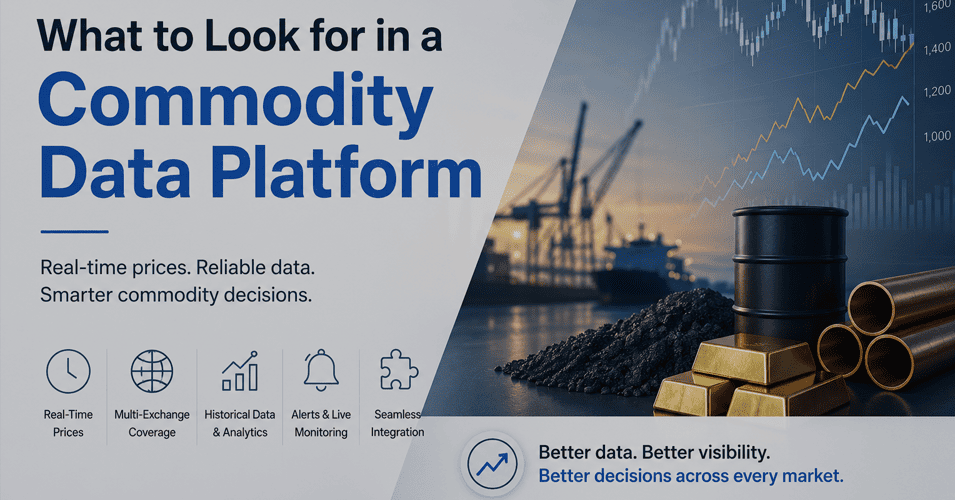
- Track real-time commodity prices
- Compare data across exchanges
- Monitor historical price trends
- Analyze market movements
- Support procurement and treasury decisions
The value comes from reducing the gap between receiving data and being able to act on it.
Real-Time Commodity Prices and Market Visibility
Commodity prices do not move on a schedule. Weather events, geopolitical developments, interest rate changes, or supply disruptions can shift markets within hours.
Delayed data may still be accurate, but it reflects conditions that no longer exist.
For procurement and treasury teams, this affects:
- Supplier negotiations
- Commodity cost forecasting
- Exposure monitoring
- Hedging decisions
- Budget planning
Real-time commodity market data improves visibility by helping teams respond to current market conditions instead of outdated snapshots.
Data Accuracy, Reliability, and Historical Coverage
Reliable commodity data is about consistency, not just volume.
Problems appear when:
- Different platforms show different prices
- Historical series change methodology
- Exchange coverage varies over time
- Revised prices are updated without notice
These issues create forecasting and reporting inconsistencies that are difficult to trace later.
A strong commodity data platform should provide:
- Consistent benchmark pricing
- Transparent historical revisions
- Reliable historical market data
- Clear methodology across exchanges
This improves confidence in analytics, forecasting, and reporting.
Multi-Exchange Coverage and Global Market Access
Commodity-exposed businesses rarely monitor a single market.
Manufacturers, treasury teams, and traders often track prices across:
- CME
- NYMEX
- ICE
- LME
- Regional commodity exchanges
Limited exchange coverage creates blind spots, especially during volatile market conditions.
A multi-exchange commodity platform allows businesses to compare prices across markets, monitor spreads, and identify market shifts earlier.
Forecasting, Analytics, and Decision Support Tools
A dashboard showing prices alone is not enough.
Modern commodity analytics platforms should support:
Trend Analysis:
Track how prices move over time rather than viewing isolated updates.
Commodity Forecasting:
Build forward-looking assumptions using historical and real-time data.
Alerts and Live Monitoring:
Receive notifications when commodity prices move beyond defined thresholds.
Comparative Analytics:
Compare markets, time periods, and price ranges within the same environment.
These tools help businesses move from passive monitoring to active decision-making.
Integration, APIs, and Enterprise Infrastructure
Most organizations already use ERP systems, treasury platforms, and reporting tools. Commodity data becomes difficult to manage when it cannot integrate smoothly into existing workflows.
Key capabilities include:
- Commodity market data APIs
- ERP integration
- Excel connectivity
- Centralized reporting environments
Without integration, teams rely on manual exports, spreadsheets, and repeated reconciliation between systems.
Financial data integration reduces manual handling and keeps reporting aligned across departments.
Practical Use Cases Across Business Functions
Procurement Teams:
- Track supplier pricing against live market benchmarks
- Improve purchasing timing
- Build more accurate cost assumptions
Treasury and Finance Teams:
- Monitor commodity exposure
- Improve liquidity planning
- Track hedge positions against market conditions
Analysts and Trading Teams:
- Monitor cross-market trends
- Compare historical price movements
- Build forecasting models using reliable data
What Separates a Reliable Platform from a Basic Data Feed?
The difference becomes clear when businesses start using the data operationally.
Real-Time Access vs. Delayed Feeds:
Real-time systems support live decision-making, while delayed feeds support retrospective reporting.
Centralized Data vs. Fragmented Pricing:
Centralized commodity data reduces reconciliation and ensures teams work from the same information.
Interactive Analytics vs. Static Reports:
Interactive tools allow teams to compare scenarios, adjust time ranges, and analyze trends without rebuilding reports manually.
The platform should support decisions, not just display prices.
Choosing a Platform for Long-Term Decision-Making
Commodity markets continue to become more volatile and interconnected. Businesses need platforms that provide:
- Reliable commodity market data
- Real-time pricing visibility
- Multi-exchange coverage
- Historical depth
- Forecasting and analytics tools
- API and enterprise integration
The right commodity data platform improves visibility, reduces manual effort, and supports faster, more informed decisions across procurement, treasury, and finance operations.
For businesses looking to bring that together, Tresmark’s Track & Analyze Commodities platform covers real-time commodity monitoring, multi-exchange data, and analytics built around the decisions commodity-exposed organizations actually need to make.