- August 24, 2026
- Posted by: Tresmark
- Category:
No Comments
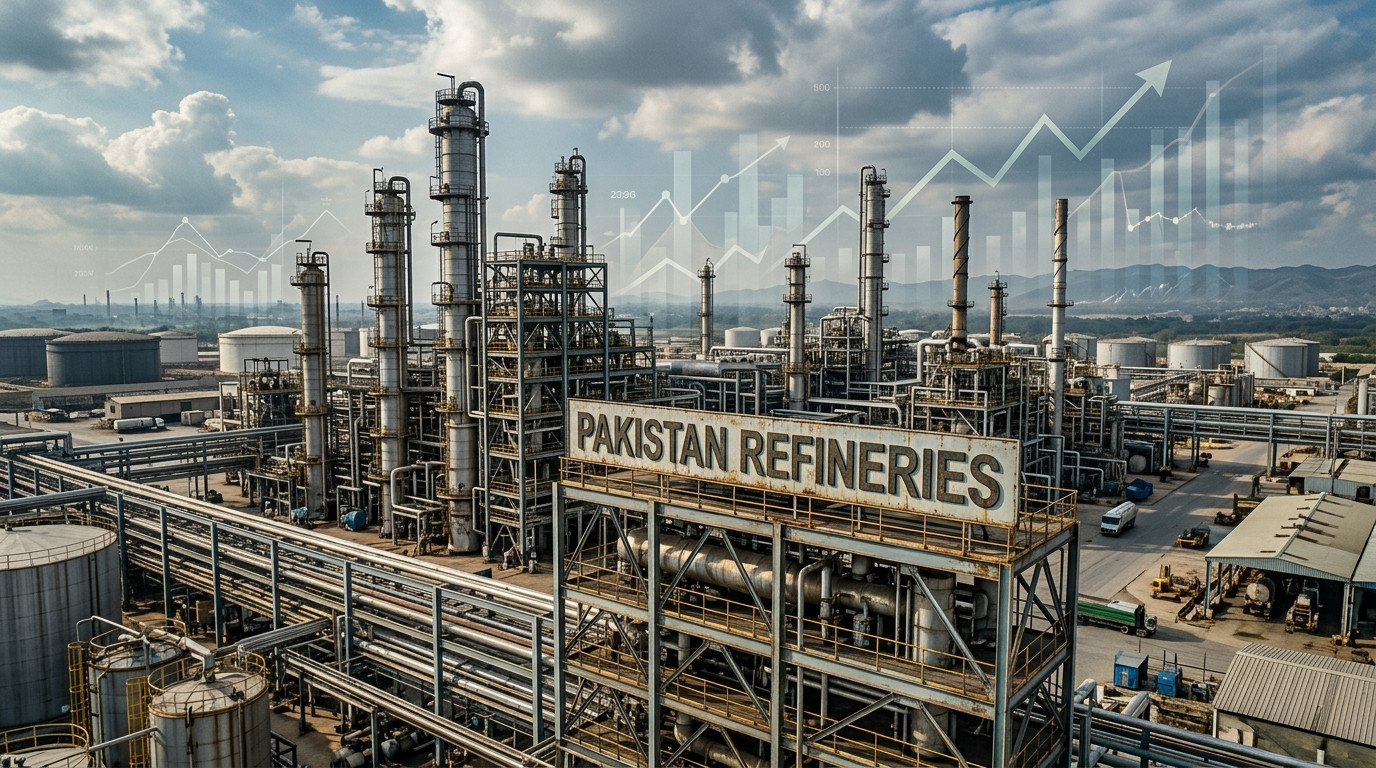
Pakistan’s oil refineries are prepared to sign long-delayed agreements under the government’s amended Brownfield Refinery Policy, despite concerns over a new requirement to surrender 2.5% of the deemed duty retained on diesel.
Refinery operators argue that the financial penalty could amount to billions of rupees and is unfair because much of the delay in finalising the agreements was outside their control.
The Brownfield Refinery Policy, originally approved in 2023 and subsequently amended twice, aims to attract investment for upgrading Pakistan’s ageing refining infrastructure and increasing domestic production of higher-value petroleum products.
Petroleum Minister Ali Pervaiz Malik has indicated that the agreements are expected to be finalised soon, with the Petroleum Division targeting completion by the end of August.
Refineries Object to Penalty
Under the revised arrangements, refineries will have to return 2.5% of the deemed duty retained on diesel between the previous deadline and the signing of the new agreements.
Adil Khattak, CEO of Attock Refinery and chairperson of the Energy Committee of the Overseas Investors Chamber of Commerce and Industry, said Attock Refinery and National Refinery had completed key requirements before the earlier October 2024 deadline, including initial agreements with Ogra, board approvals and Rs1 billion bank guarantees each.
Khattak said Attock Refinery alone is facing a penalty of around Rs7.5 million per day due to the delay.
Despite the objection, refinery operators have indicated that they will proceed with signing the agreements. Draft agreements were recently shared with refineries, with further consultations expected involving the Ministry of Finance, Controller of Accounts and Interstate Gas Systems.
Upgrade Programme Seen as Critical
Refineries argue that the penalty could weaken investment incentives at a time when Pakistan needs significant capital to modernise its refining sector and reduce reliance on imported petroleum products.
Khattak estimated that delays in upgrading domestic refineries cost Pakistan around $1.5 billion annually through additional fuel imports and associated foreign exchange outflows.
The upgrade programme has also gained importance from an energy-security perspective following recent disruptions in global energy markets.
Attock Refinery has already largely completed its front-end engineering work and has started discussions with banks regarding financing for its planned upgrade.
The government considers modernising domestic refining capacity strategically important for strengthening energy security, reducing import dependence and improving the efficiency of Pakistan’s petroleum sector.