- May 14, 2026
- Posted by: Tresmark
- Category:
Govt Debt Crosses Rs80 Trillion Mark by March-End
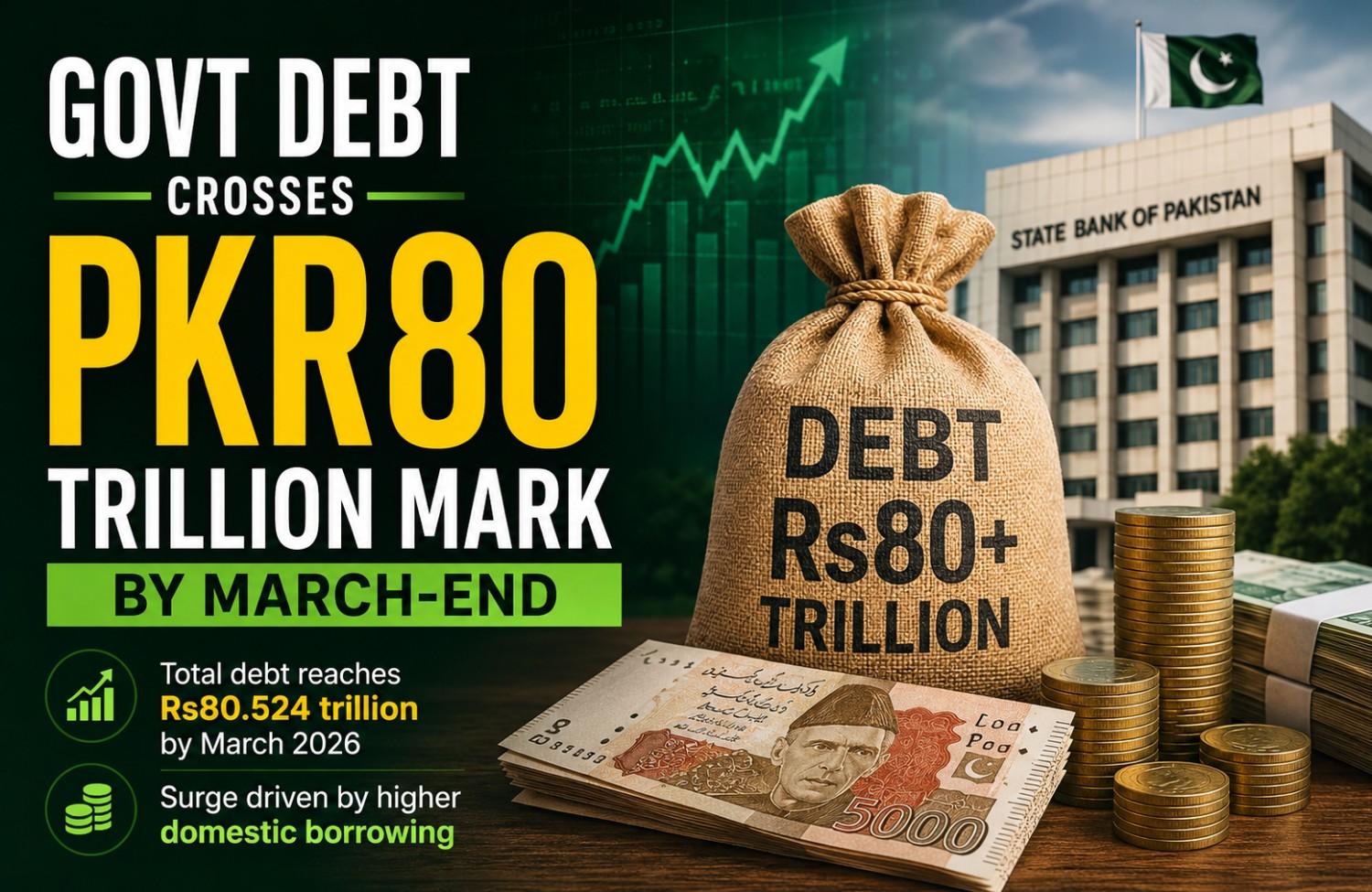
Pakistan’s central government debt surged past the Rs80 trillion mark by the end of March 2026, mainly due to increased long-term domestic borrowing, according to the latest data released by the State Bank of Pakistan (SBP).
The SBP data showed that the country’s total debt stock — including both domestic and external liabilities — increased by Rs2.636 trillion during the first nine months (July–March) of fiscal year 2025-26. As a result, the central government’s total debt reached a record Rs80.524 trillion by March-end, compared to Rs77.888 trillion recorded in June 2025.
The rise in debt reflects accelerated borrowing from domestic sources by the federal government to meet financing needs amid ongoing fiscal pressures.
Domestic Debt Rises Sharply
On the domestic front, debt stock increased by 5.6 percent, or Rs3.1 trillion, during the July–March period. Domestic debt climbed to Rs57.566 trillion by the end of March 2026, up from Rs54.472 trillion in June 2025.
The SBP noted that the government continued retiring its outstanding debt owed to the central bank while simultaneously increasing borrowing from scheduled commercial banks during the current fiscal year.
To take advantage of declining interest rates and extend the maturity profile of its liabilities, the government kept auction targets for Treasury Bills (T-bills) below or near maturities, resulting in net retirement in short-term debt instruments. Meanwhile, higher targets were allocated for Pakistan Investment Bonds (PIBs).
According to the SBP, the government mobilized the bulk of its financing through fixed-rate PIBs, followed by floating-rate PIBs with semi-annual coupons, as part of its strategy to reduce exposure to interest rate risks.
External Debt Declines
In contrast to the rise in domestic debt, Pakistan’s external debt recorded a slight decline during the same period. External liabilities fell by Rs458 billion, decreasing from Rs23.417 trillion in June 2025 to Rs22.959 trillion by March 2026.
Fiscal Position Improving
Advisor to the Finance Minister Khurram Schehzad said Pakistan’s fiscal position continues to strengthen despite the increase in debt levels.
He stated that the fiscal deficit declined to just 0.7 percent of GDP during the first nine months of FY26 — the lowest level in the country’s history — compared to 2.6 percent recorded during the same period last fiscal year.
Schehzad added that revenues are improving, expenditures remain under control, debt vulnerabilities are easing, and the external account remains resilient.
“For the first time in decades, both fiscal and external balances have improved simultaneously, strengthening macroeconomic stability, resilience, and investor confidence,” he said.