- September 23, 2026
- Posted by: Tresmark
- Category:
No Comments
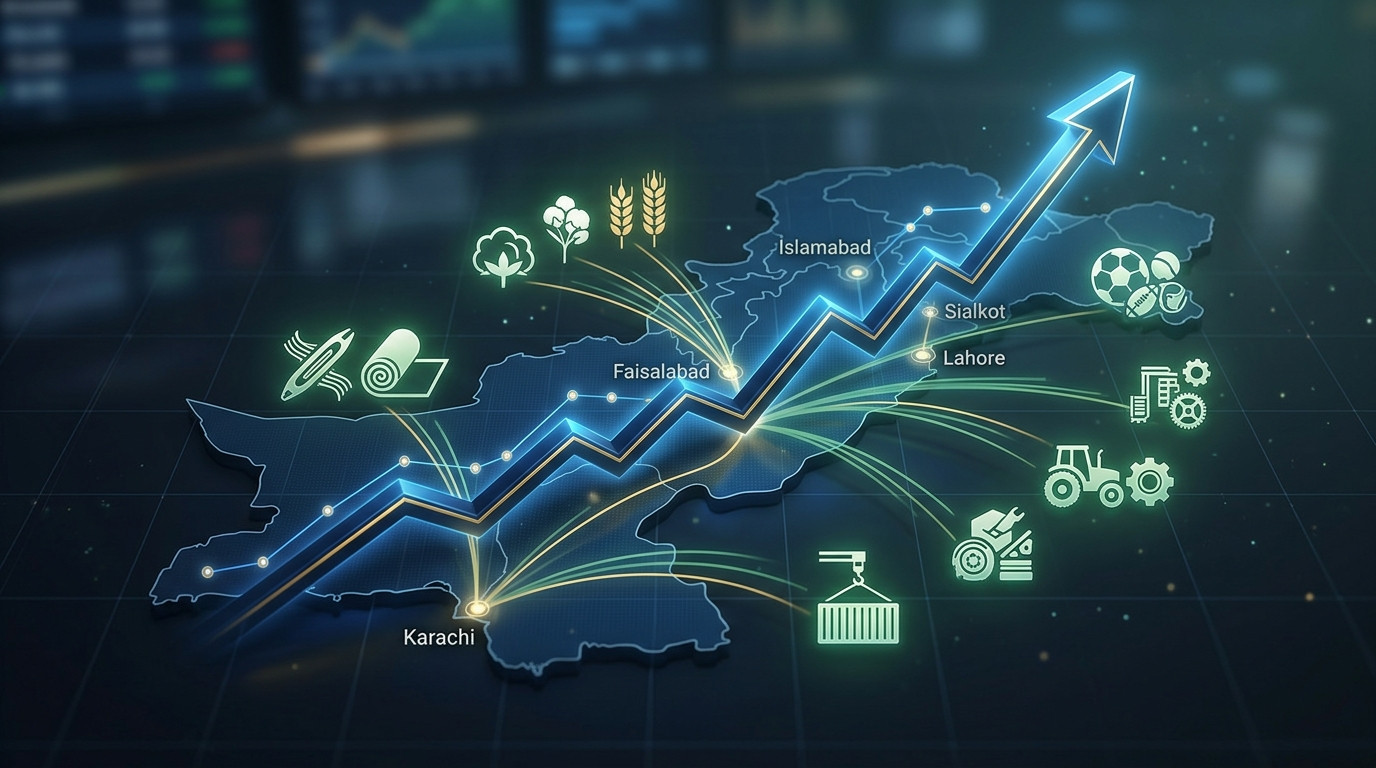
Pakistan has launched its first National Economic Mission focused on accelerating exports, with the government targeting export earnings of $63 billion by 2030 and $100 billion by 2035.
The initiative, titled “Export Acceleration, Production, Quality, Innovation and Branding,” aims to make export growth a central component of Pakistan’s economic strategy through diversification, higher industrial productivity, stronger commercial diplomacy and the development of globally competitive industrial clusters.
Planning Minister Ahsan Iqbal chaired the mission’s first high-level stakeholder meeting in Islamabad, bringing together federal ministries and other stakeholders to develop a coordinated implementation roadmap.
Iqbal said Pakistan needed to reduce its reliance on external borrowing by strengthening its capacity to generate foreign exchange through exports. The initiative is one of 11 National Economic Missions approved under the government’s Uraan Pakistan programme.
Pakistan’s exports rose from around $9 billion in 2000 to approximately $41 billion in 2024, reflecting a compound annual growth rate of 6.5%. The government noted that Vietnam’s exports increased from around $14 billion to $405 billion during the same period, while Bangladesh’s exports grew from roughly $5 billion to more than $55 billion.
The Export Acceleration Mission will be built around seven pillars: sector-specific export tracks, export enablement, cluster-based diversification, productivity, quality, innovation and sustainability (PQI+), commercial diplomacy, National Brand Pakistan, and accountability and performance.
The government plans to coordinate policies covering energy, taxation, customs, logistics and financing with export objectives while expanding access to non-traditional international markets.
A cluster-based approach will focus on developing existing industrial capabilities into internationally competitive export hubs. Examples highlighted by the government include Wazirabad’s cutlery sector, Gujrat’s fan manufacturing industry, and furniture production in Chiniot and Gujranwala.
The strategy will seek to strengthen these clusters through better product development, certification, design, technology, branding and market intelligence, while increasing participation in global value chains and special economic zones.
Under the National Brand Pakistan pillar, the government plans to establish “Made in Pakistan” as a stronger international brand. Meanwhile, the PQI+ framework will target improvements in productivity, quality, innovation and sustainability.
Commercial diplomacy will focus on using Pakistan’s diplomatic network to improve market access, facilitate trade agreements and create opportunities in high-potential and non-traditional markets.
Iqbal directed participating ministries and stakeholders to prepare an implementation roadmap containing specific targets, timelines and institutional responsibilities. The Ministry of Planning will coordinate the process and provide technical support.