- July 16, 2026
- Posted by: Tresmark
- Category:
No Comments
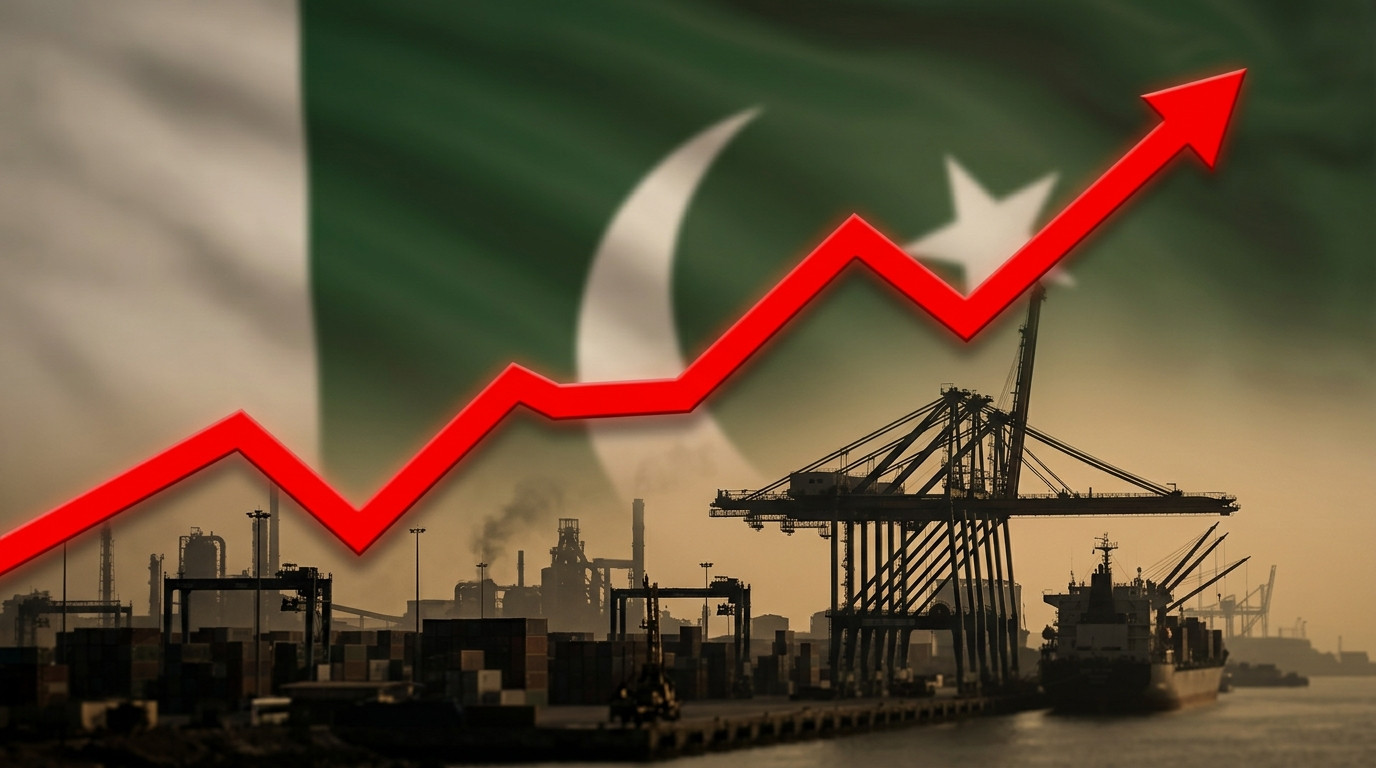
Pakistan's trade deficit climbed to a 10-year high of $39.4 billion in FY2025-26, as weak export performance and rising imports exposed persistent structural weaknesses in the economy, according to a report by Economic Policy & Business Development.
Over the past decade, the country's exports increased by only 37.4%, rising from $21.9 billion in FY2016 to $30.1 billion in FY2026. During the same period, imports expanded 69.1% to $69.5 billion, resulting in the trade gap widening by 105.2%, the largest increase in the past decade.
The report noted that this year's deficit was driven by structural issues rather than external commodity shocks. Exports declined 6.8% year-on-year, missing the government's $35.3 billion target by $5.2 billion, while imports increased 17.6%, supported by duty relaxations and higher global oil prices.
It added that Pakistan's exports have remained largely stagnant within a range of $22 billion to $33 billion over the last decade, highlighting the absence of a long term export growth strategy. The government's FY2026-27 export target of $32.8 billion also remains below the ambitions outlined in the National Economic Transformation Plan.
Applied economist Dr. Jazib Mumtaz said Pakistan's export sector remains heavily concentrated, with around 60% of exports comprising textiles and related products, 30% coming from agriculture, and only 10% from other industries.
He noted that lower value added textile products continue to dominate exports, limiting growth. According to him, Pakistan must diversify into higher value products across textiles, agro-processing, electrical goods, chemicals, pharmaceuticals, and other manufacturing sectors to achieve sustainable export expansion.
On the import side, Dr. Mumtaz said Pakistan continues to rely heavily on imported oil, vehicles, food products, and other value added goods to meet domestic demand, suggesting imports are likely to keep rising. He recommended increasing value addition in the minerals and chemicals sectors while also expanding services exports and strengthening the country's competitive advantage in agriculture.
Former Korangi Association of Trade and Industry (KATI) President Farazur Rehman described the decade long trade performance as a warning for policymakers, arguing that Pakistan has lagged behind regional competitors that successfully diversified into engineering products, electronics, pharmaceuticals, automobiles, information technology, and processed foods.
He said exporters continue to face high energy costs, expensive financing, inconsistent policies, complex taxation, weak logistics, limited technological investment, and insufficient export diversification. Rehman called for regionally competitive energy tariffs, easier access to credit, stable tax policies, faster customs procedures, improved infrastructure, and long term policy consistency.
Lasbela Chamber of Commerce and Industry President Ismail Suttar also stressed the need to expand production and diversify exports, noting that even record workers' remittances of around $41 billion are insufficient for an economy approaching 300 million people. He urged policymakers to move beyond exporting a limited range of products to a small number of markets.
Meanwhile, international trade expert Adil Nakhoda argued that Pakistan's economic challenges extend beyond incentive schemes. He said the country's reliance on remittances, which now exceed export earnings, reflects decades of underinvestment in productive capacity. Despite various tax concessions and export support measures, he maintained that Pakistan's tariff structure continues to discourage export competitiveness while protecting the domestic market, with remittances supporting consumption rather than productive investment.