- February 28, 2026
- Posted by: Tresmark
- Category:

Tresmark: The Rupee has appreciated by roughly 60 paisa since the start of the year. On its own, that move is modest. In context, however, it becomes more meaningful. It has strengthened despite:
* Rising geopolitical risk and US posturing in the region
* Escalation along the western border and isolated internal security events
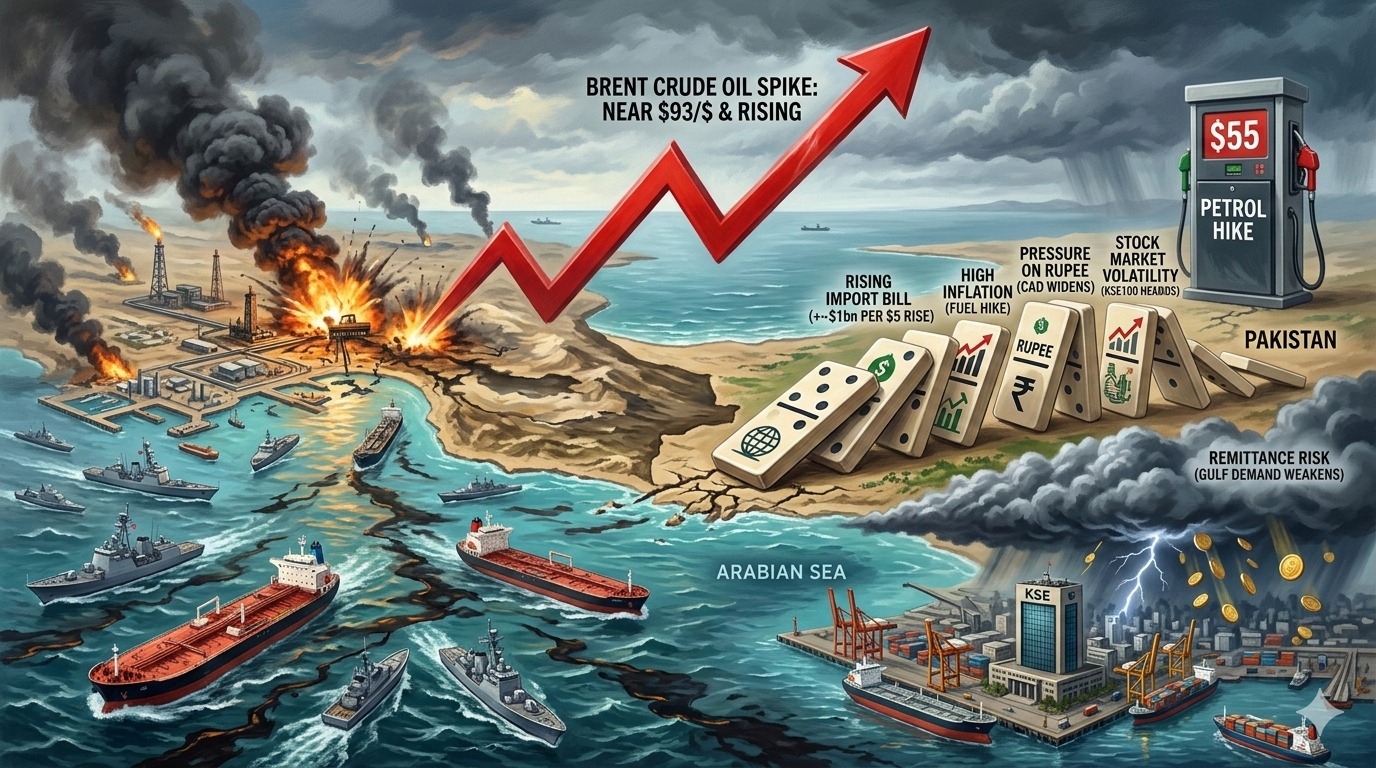
* Brent trading above $72
* A steady dip in exports and a widening trade deficit
* Tariff pressures
* A persistent inflation differential with the US
Seasonal remittance inflows around Ramadan and Eid are likely to keep the Rupee well bid in the near term.
That said, most economists argue that further appreciation offers limited structural benefit, which makes the recent firmness somewhat counterintuitive.
Rupee stability is not isolated. Several high-carry or reform-backed EM currencies have also held firm despite geopolitical noise, including the Egyptian Pound, Thai Baht, South African Rand, Brazilian Real, Mexican Peso and Indonesian Rupiah.
Should exporters book forwards
Premiums have marginally improved. If costing is tight, exporters should opt for forwards, as Rupee outlook continue to look stable to slightly stronger.
KSE & Geopolitics
The KSE100 is attempting to stabilise after a sharp correction, but the environment remains fragile. If you want a real-time gauge of geopolitical risk, watch gold. Yesterday it jumped nearly $70, signalling that risk premium remains elevated.
President Trump’s two-week deadline to Iran, which converges around 5 March, is firmly on the minds of traders. The coming week could therefore be tricky, as positioning is likely to remain cautious ahead of clarity.
Intraday volatility remains elevated, while volumes have thinned. That combination typically is not good for trading conditions.
SBP & Rates: Tight Enough
The latest MPS signalled that policy remains adequately tight. Growth projections were upgraded, but core inflation remains sticky. Real rates remain positive, anchoring the front end of the curve.
The longer end, however, is more sensitive to oil dynamics, fiscal arithmetic and global yield movements. Any sustained external pressure could transmit through the bond market before appearing in equities.
IMF engagement remains the anchor for macro credibility.