- January 7, 2026
- Posted by: Tresmark
- Category:
The government is mulling various options to convince the International Monetary Fund (IMF) to secure relaxations on different macroeconomic and fiscal frameworks for the next budget 2026-27 with the intention to spur the sluggish economic activities.
This thinking among policymakers has surfaced in the context of increasing criticism over the IMF’s Extended Fund Facility (EFF) that suffocated growth by increasing tax burden and hike in electricity and gas tariffs.
With the lenient conditions of IMF, the government wants the revival of the economic growth, attracting investment, reducing unemployment and poverty, cutting power tariffs, offering tax incentives and creating room for a reduction in the policy rate. The government plans possible relaxation in targets related to the primary balance and provincial budget surpluses in the next fiscal year 2026-27. The government might request the IMF to allow a relatively higher fiscal deficit target in the upcoming budget to create fiscal space for growth-oriented measures.
After completing two years in office, the government has now started moving seriously towards allowing the economy to grow during the third year of its tenure, to achieve economic growth of 5 to 6 percent. Prime Minister Shehbaz Sharif has instructed the Ministry of Finance and the Federal Board of Revenue to fully cooperate with the business community to help attract domestic and foreign investment.
Four key proposals have been discussed, with the government’s foremost priority being export-led growth. The prime minister has also expressed concern over the trade deficit recorded during the July to December period of the current fiscal year. The second major proposal focuses on boosting investment by exploring all possible opportunities. The Special Investment Facilitation Council has been tasked with taking concrete measures to increase investment. Another proposal under consideration is a further reduction in power tariffs to provide industry with a competitive edge in international markets. The government is also seeking fiscal space to offer tax incentives.
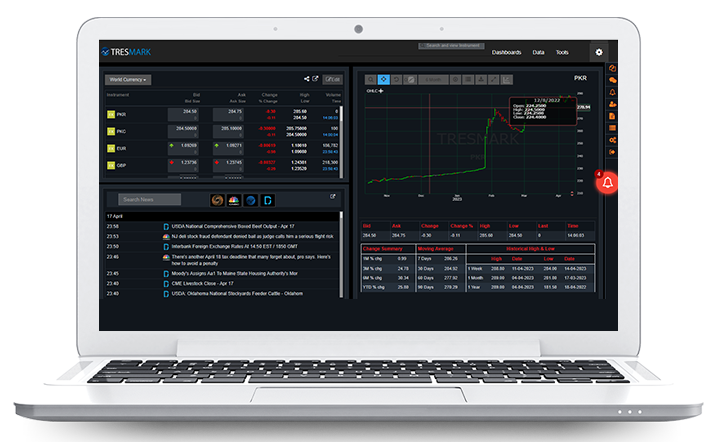
The Only Financial Information Platform You Need
Tresmark is the market leader, the only tool you need for a full picture od the financial markets
According to the draft of the industrial policy, a decision has been made to reduce super tax for the manufacturing sector, but it will be implemented subject to the approval of IMF. Under the new industrial policy, the government has decided to lower the super tax rate for manufacturing. Under the proposed reforms, the super tax rate for the manufacturing sector will be gradually reduced to 5 percent over four years, while the tax will be abolished in the fifth year if a primary surplus is achieved. Approval of the industrial policy from the IMF is still pending.