- January 31, 2026
- Posted by: Tresmark
- Category:
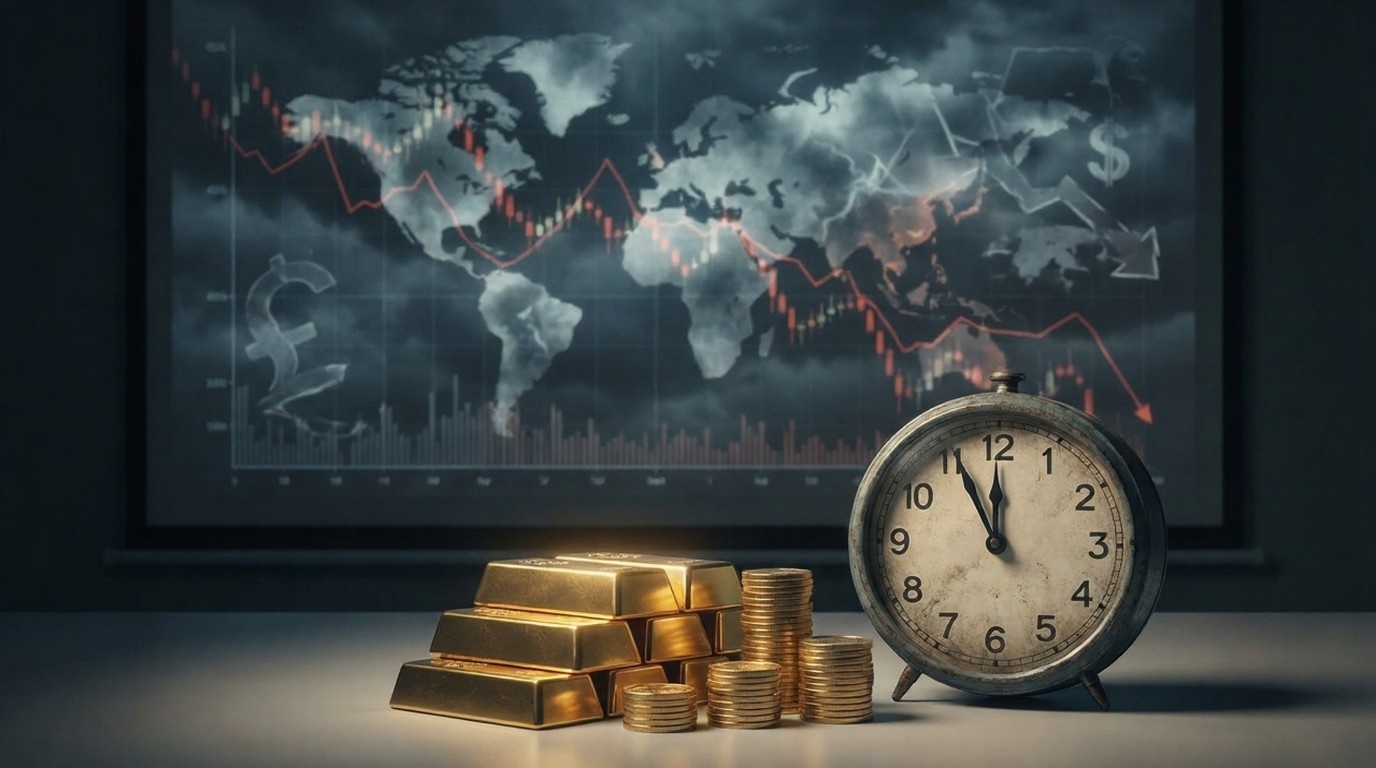
Gold Is No Longer a Hedge. It’s Acting Like Insurance
Gold’s recent behaviour is sending a different signal than in past crises. Rather than acting as a traditional hedge, the metal is increasingly being treated as insurance against a gradual erosion of global credibility—economic, political, and institutional.
The Doomsday Clock and Market Anxiety
The Doomsday Clock was created in 1947 by scientists including Albert Einstein. Its purpose was never to predict apocalypse, but to measure how reckless humanity is at a given point in time.
This week, the clock moved forward by four seconds. It now stands at 85 seconds to midnight, the closest reading ever recorded.
The shift reflects an accumulation of risks:
-
Expanding global conflicts
-
Weakening international guardrails
-
Rising climate and AI-related threats
-
Growing financial instability
The clock is symbolic. Financial markets are not. What markets are now reflecting is an economic version of the same underlying anxiety.
Gold’s Recent Volatility Signals a Shift
Gold and other metals surged sharply earlier this month, only to reverse just as quickly. That pattern is not typical of a stable safe-haven asset.
The sharp moves point to:
-
Crowded positioning
-
Thin liquidity
-
Short-term speculative flows
But beneath the volatility, gold appears to be raising a deeper question—one tied to policy credibility, fiat currency confidence, and the broader structure of modern capitalism.
Investors and traders looking to navigate these shifts can track and analyze commodities in real-time to make informed decisions on gold, silver, and other metals.
Fed Independence Is Now a Market Variable
Central bank independence was once treated as an academic concept. Today, it is actively being priced by markets.
Political pressure on the US Federal Reserve has introduced uncertainty around policy decisions. Investors are responding not to specific rate moves, but to the possibility that monetary policy may become less predictable over time.
The Dollar Is Losing Its Automatic Safe-Haven Status
The US Dollar Index has slipped toward the 96 level and is currently trading near 97.
In previous periods of global stress, the US dollar strengthened by default. This time, that automatic bid is missing.
The view remains that the Dollar Index could move toward 92 this year if policy uncertainty and trade tensions persist.
Trade Wars and Fragmented Global Alliances
Tariffs are increasingly being used as tools of economic pressure—even between traditional partners. The result is:
-
Higher uncertainty
-
Fragmented trade relationships
-
A rising global cost of capital
This does not break the system overnight. Instead, it weakens it gradually.
Japan’s Return to Global Market Focus
Japan is no longer a quiet anchor in global markets. Rising bond volatility and policy normalization there have implications far beyond its borders.
Any sustained shift in Japan’s policy stance could raise term premiums across global bond markets, affecting funding costs worldwide.
Key Takeaway: Markets Are Repricing Credibility
This is not panic. But it is not normal either.
Markets are no longer just pricing risk—they are repricing credibility. In this environment, protection matters more than premium.
Pakistan’s Relative Position in a Volatile World
Amid global uncertainty, Pakistan appears relatively better positioned to absorb volatility. Most indicators—excluding exports and productivity—remain stable, and the country is largely outside the center of major geopolitical conflicts.
Pakistan’s core challenge is not growth or interest rates. It is consistency and trust.
Currency Outlook: Hedging Driven by Costing, Not Fear
Over the past week, exporters have increased forward bookings despite relatively weak premiums. More notably, they are locking in longer tenors than usual.
This behaviour suggests expectations of a range-bound exchange rate environment rather than sharp moves. Hedging decisions are being driven by cost management, not panic.
SBP Policy: Balancing Liquidity and Inflation Optics
As expected, the State Bank of Pakistan kept policy rates unchanged, citing sticky core inflation. At the same time, it reduced Cash Reserve Ratio (CRR) requirements, injecting liquidity into the system.
While lower CRR can be inflationary, the move likely reflects a need to release surplus liquidity—particularly ahead of fiscal pressures such as the super tax.
Precious Metals Positioning: Reset, Not Reversal
The recent pullback in gold and silver reflects multiple factors converging:
-
Liquidation amid rising Iran-related escalation risk
-
Profit-taking after a crowded rally
-
Margin calls and stop-loss triggers
-
Reassessment of expectations around the next Fed leadership, with the potential successor seen as less dovish than initially assumed
There has been no sustained surge in the dollar, no spike in real yields, and no sign of large-scale structural selling.
Gold as Insurance, Not a Hedge
The recent dip appears to have reset the trade rather than reversed it. Gold is no longer behaving like a hedge against short-term volatility. It is acting as insurance against a slow erosion of confidence in monetary and geopolitical anchors.
The uptrend is likely to continue, but at a more sustainable pace.
Historically, fear flowed into the US dollar. This time, it is flowing into gold.
Stay ahead in the markets with instant updates on financial news, currency movements, and PSX trends. Click here to receive them directly on WhatsApp Channel
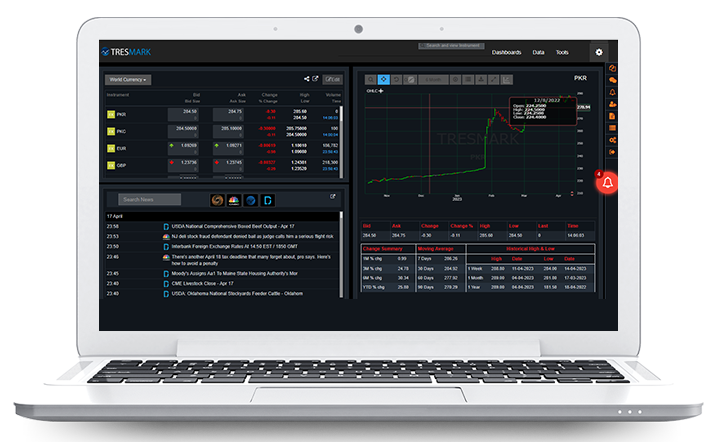
Sign Up for Live Silver/Gold Rates
Tresmark is the market leader, the only tool you need for a full picture of the financial markets