- September 28, 2026
- Posted by: Tresmark
- Category:
No Comments
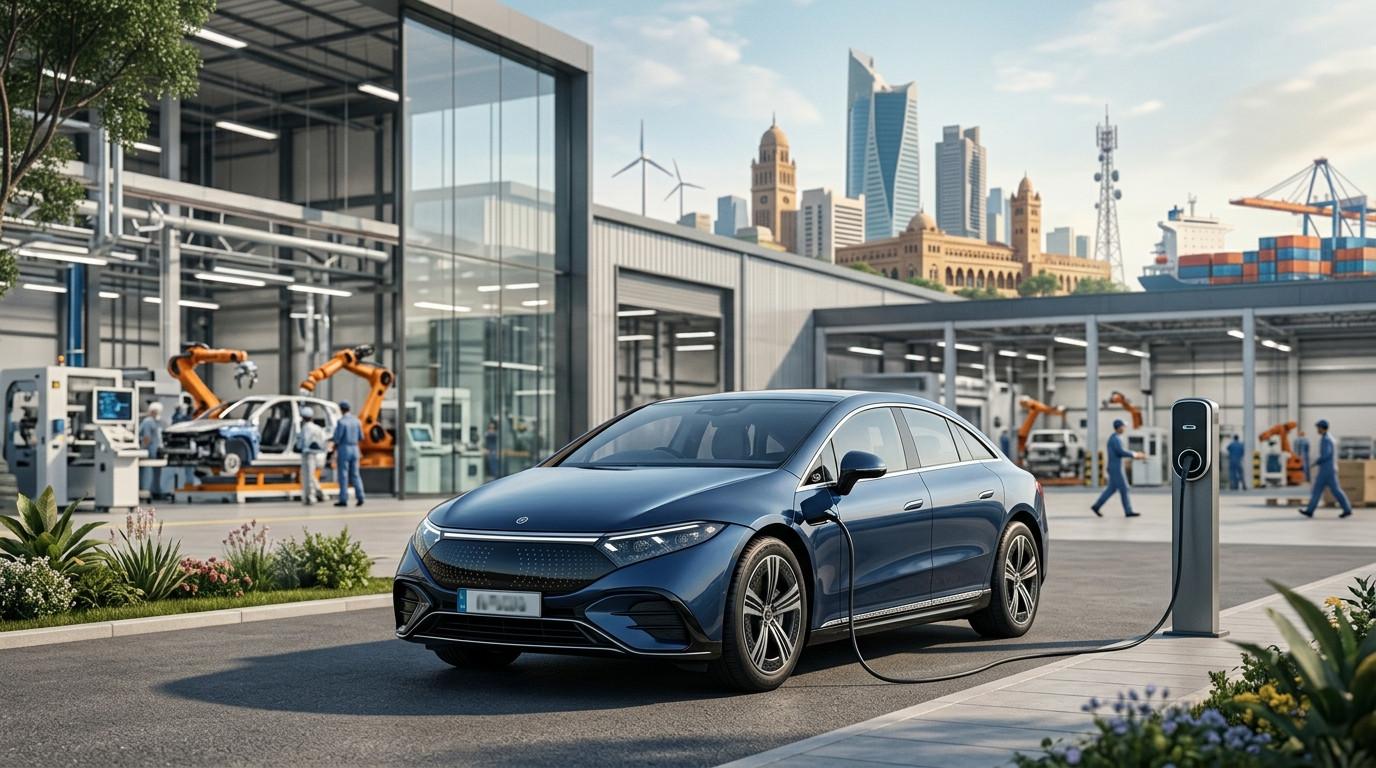
Pakistan’s electric vehicle (EV) market is entering a new phase as Chinese automakers expand rapidly into emerging markets, challenging the long-standing dominance of Japanese manufacturers.
China’s vehicle exports have surged, with EVs and plug-in hybrids accounting for a growing share of overseas sales. As trade barriers limit access to some Western markets, Chinese companies are increasingly targeting developing economies, including Pakistan.
The shift is being supported by Pakistan’s New Energy Vehicle Policy 2025-30, which aims to increase the share of new energy vehicles while expanding charging infrastructure and encouraging investment in the sector.
Chinese brands including Haval, Changan, Chery, BAIC and Jetour have already strengthened their presence in Pakistan’s SUV and crossover segments. In the EV market, BYD, Deepal and Honri are also expanding their footprint, bringing greater competition to a market historically dominated by Toyota, Honda and Suzuki.
However, higher EV sales alone will not guarantee significant economic gains for Pakistan. A major concern is that imported batteries, electronics and other high-value components could replace the country’s dependence on imported fuel with another form of import dependence.
The key challenge is therefore localisation. Manufacturers will need to move beyond assembling imported CKD and SKD kits and gradually develop domestic capabilities in areas such as battery-pack assembly, wiring harnesses, castings, plastics, interiors, charging equipment and thermal-management systems.
Charging infrastructure is another critical requirement. The government has set a target of 3,000 public fast-charging stations by 2030, but achieving this will require private investment, grid improvements and common technical standards. Existing fuel stations could potentially be converted into charging hubs, while battery swapping and fleet-charging solutions may prove particularly useful for motorcycles, rickshaws and taxis.
Electrifying high-use segments such as motorcycles, three-wheelers, taxis and commercial vehicles could also provide larger fuel-import savings than focusing solely on premium passenger EVs.
The Automotive Industry Development Policy 2026-31 further increases the focus on localisation, investment and exports. Pakistan could use Chinese companies’ expansion plans to secure technology transfer, supplier development, workforce training and export-oriented manufacturing.
For Pakistan, the long-term objective should therefore extend beyond selling more EVs. The real opportunity lies in building a domestic supply chain, reducing the import burden and integrating local manufacturers into international automotive value chains.
China may have established the technology and scale needed for mass EV production. Pakistan’s challenge is to capture a larger share of the value created by that technology and evolve from an assembly market into a manufacturing and export base.