- September 25, 2026
- Posted by: Tresmark
- Category:
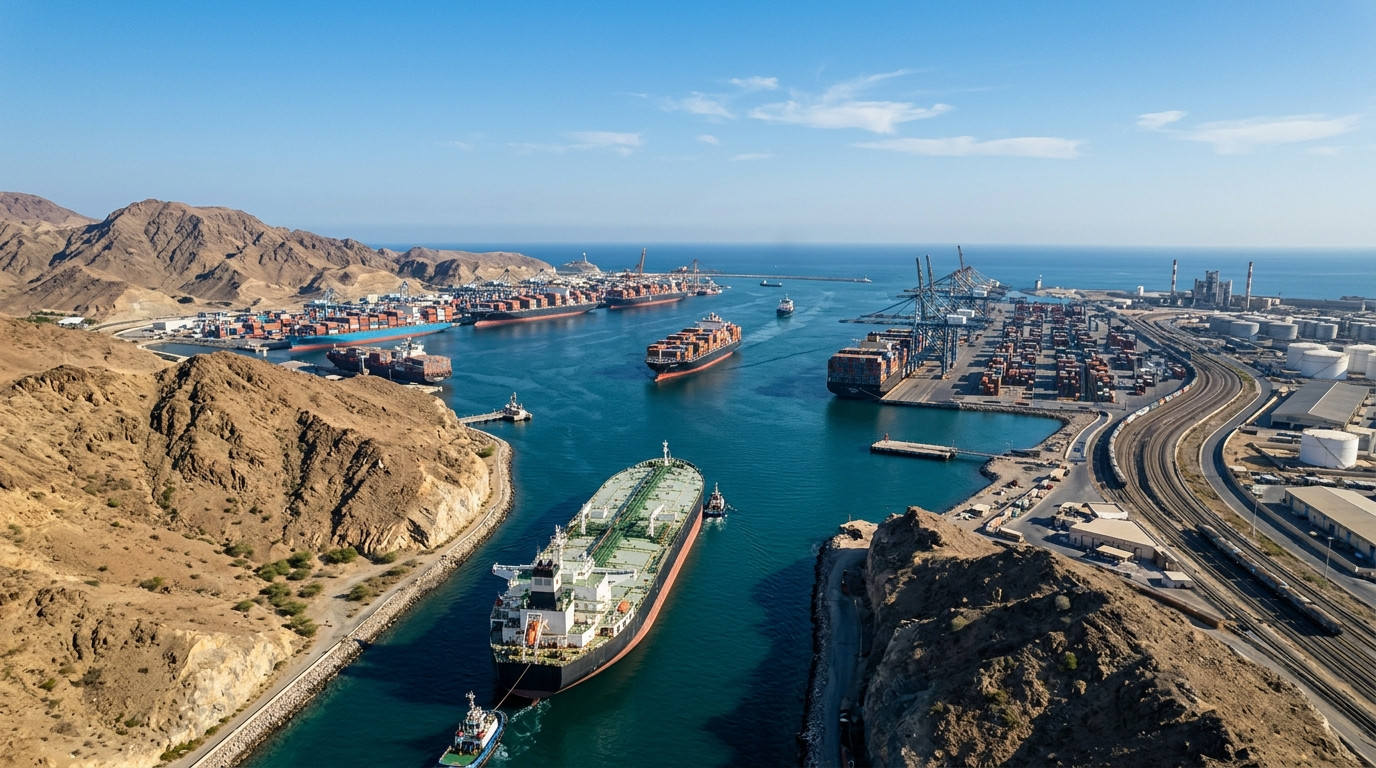
An adviser to Iran’s supreme leader Mojtaba Khamenei warned on Thursday that Tehran may expand the Middle East war to the Indian Ocean if the US attacks again.
“Since the conflict has spread from the Persian Gulf and Strait of Hormuz to the Red Sea, it is possible that, in response to more war, the front will expand even further, reaching the Indian Ocean and perhaps beyond,” said Yahya Rahim Safavi in a video released by Iran’s Fars news agency.
Iranian officials had already threatened to expand the geographic scope of the conflict if US strikes resume. But Thursday’s warning is the first time an adviser to Iran’s supreme leader explicitly mentioned the Indian Ocean, home to a strategic US-British military base at Diego Garcia, nearly 4,000 kilometres from Iran.
Saudi Arabia intercepted Houthi ballistic missiles on Thursday after issuing warnings for several regions including Makkah, as the Iran-backed group ramps up attacks on the kingdom.
The attacks were reported as fighting raged in Yemen between the Houthis and Riyadh-backed government forces, killing dozens on both sides, according to a tally from seven sources who spoke to AFP.
Earlier, the Saudi Civil Defence had issued a brief series of alerts including one for Makkah, home to Islam’s holiest sites, with separate warnings for the Red Sea governorate of Yanbu as well as the Taif, Jeddah and Tabuk regions. The alerts were lifted a few minutes later. In recent weeks, alerts have often preceded attacks by the Houthis.
Houthis said on Thursday that they had launched missile and drone attacks on what they described as “a sensitive target” in Saudi Arabia’s capital Riyadh and on Saudi Aramco facilities in the Red Sea city of Yanbu.
The statement came after Saudi Arabia said it had intercepted six ballistic missiles fired by the Houthis towards the southern province of Taif and Yanbu area on the Red Sea.
Stock markets mostly fell and oil prices climbed on Thursday as inflation fears, driven by a lack of progress in ending the Middle East war, drove a further sell-off in global bonds. Oil prices shot up around four percent, rekindling inflation fears. International benchmark contract Brent crude topped $107 per barrel, as uncertainty swirled around the seven-month Middle East conflict.
A coalition of 80 countries called at the UN on Thursday for the full restoration of maritime navigation in the Gulf, disrupted by Tehran after the start of the US-Israeli attacks on Iran.
“We call for the full restoration of navigational rights and principles without delay,” said Bahrain’s Foreign Minister Abdullatif bin Rashid al-Zayani, reading a joint statement to journalists.
Chinese President Xi Jinping on Thursday urged President Donald Trump to show “prudence” on the issue of Taiwan independence, and to quickly end the Iran war through talks, Xinhua reported as their meeting was ongoing in the White House.
Xi called for the United States and Iran to resolve “issues through negotiation as soon as possible,” state news agency Xinhua reported after Trump gave his Chinese counterpart a lavish welcome in Washington.
President Emmanuel Macron said Thursday France would send “military means” to help shield the key Saudi oil terminal of Yanbu from attacks by Yemen’s Iran-backed Houthis.
“We are going to send military assets, meaning soldiers, radars, and defence systems to protect this site,” he said during an interview with TF1 and France 2 during the evening news.
Trade associations representing large US companies and energy suppliers urged President Donald Trump to resist calls for a diesel fuel export ban, arguing the move would backfire.
Lebanese Prime Minister Nawaf Salam told Iranian President Masoud Pezeshkian on Thursday that his country did not want to be an arena for regional wars, after Tehran-backed Hezbollah drew it into the Middle East conflict.
Lebanon has repeatedly accused Iran of interfering in its affairs, especially since the start of the latest war, alleging that Tehran was using it as a “bargaining chip” in talks with the United States.
Salam’s office said in a statement that he met with Pezeshkian on the sidelines of the United Nations General Assembly in New York.
The United Arab Emirates said on Thursday it would no longer accept flights by Iranian airlines as it joins US sanctions aimed at raising economic pressure during the Middle East war. Dubai, the UAE’s commercial hub, is a major destination for Iran’s carriers, with multiple daily flights, a large Iranian community and close business links.
Several other countries have suspended Iranian flights, although routes to Turkiye and China were among those that remained open.
The Wall Street Journal has reported that Chinese entities and companies sent approximately 1,300 shipments containing components suitable for drone production and missile guidance systems to the Islamic Republic’s Ministry of Defense during the first six months of 2026.
According to the report published by The Wall Street Journal, the newspaper analyzed Iranian customs data spanning from January 1 through the end of June 2026.
The UN rights chief voiced outrage Thursday at the growing civilian toll in Yemen, as the conflict between the Iran-backed Houthis and Saudi-backed government forces and their allies intensifies.
The recent Houthi takeover of Yemen’s Red Sea coast has left hundreds dead and heightened fears over global trade and shipping through the vital Bab al-Mandab strait.
The US Senate on Thursday narrowly rejected a resolution demanding President Donald Trump end the war in Iran or seek congressional authorization, as Democrats sought to put Republicans on the defensive over the unpopular conflict before November’s midterm elections.
Thursday’s Senate vote was 50-49 against the resolution, largely along party lines. Four Republicans — Senators Susan Collins of Maine, Rand Paul of Kentucky, Thom Tillis of North Carolina and Lisa Murkowski of Alaska — voted in favor.
Tillis, who is leaving the Senate in January, was the only Republican to vote in favor of a war powers resolution for the first time.
Some 60 commercial vessels transited the Strait of Hormuz on Wednesday carrying the highest daily volume of crude oil since early July, despite the ongoing war between the US and Iran, a US official told Reuters, speaking on condition of anonymity.
Three Iran-linked oil tankers seized by the United States and carrying nearly six million barrels of Iranian crude oil were in the Atlantic Ocean on Thursday, tracking data indicated.
They did not have their destination marked on their transponders, but specialist website TankerTrackers said Wednesday on X that they were heading towards the United States.
Meanwhile, US and Iranian negotiators in New York are exploring a phased path out of war that would involve Tehran reopening the Strait of Hormuz and Washington lifting its economic blockade of Iran, sources close to the talks said.
The talks face a big obstacle as neither side wants to be the first to surrender its leverage, according to comments to Reuters by two Iranian sources, two regional officials and two Western diplomatic sources, but behind Iran’s stance is a recognition of the economic cost of prolonged confrontation.
A senior Iranian official said the most plausible way to end the impasse would be a phased arrangement, with Iran allowing navigation through Hormuz in return for the US lifting its economic blockade and Tehran potentially gaining access to frozen assets.
“One way forward would be to solve the crisis in stages. The first would be to end the blockade and reopen Hormuz,” he said on the sidelines of the UN General Assembly.
That would involve US President Donald Trump accepting another temporary fix, after an earlier understanding collapsed in July. So a central challenge facing the negotiators is not just to sketch out a deal but also to ensure any concessions are durable enough for both sides to trust, the sources said.
Trump has said he thinks the US and Iran could reach a deal after midterm elections to Congress on November 3. A senior European official said the Iranians “have a very long list of demands.”
Source: Reuters