- July 13, 2026
- Posted by: Tresmark
- Category:
No Comments
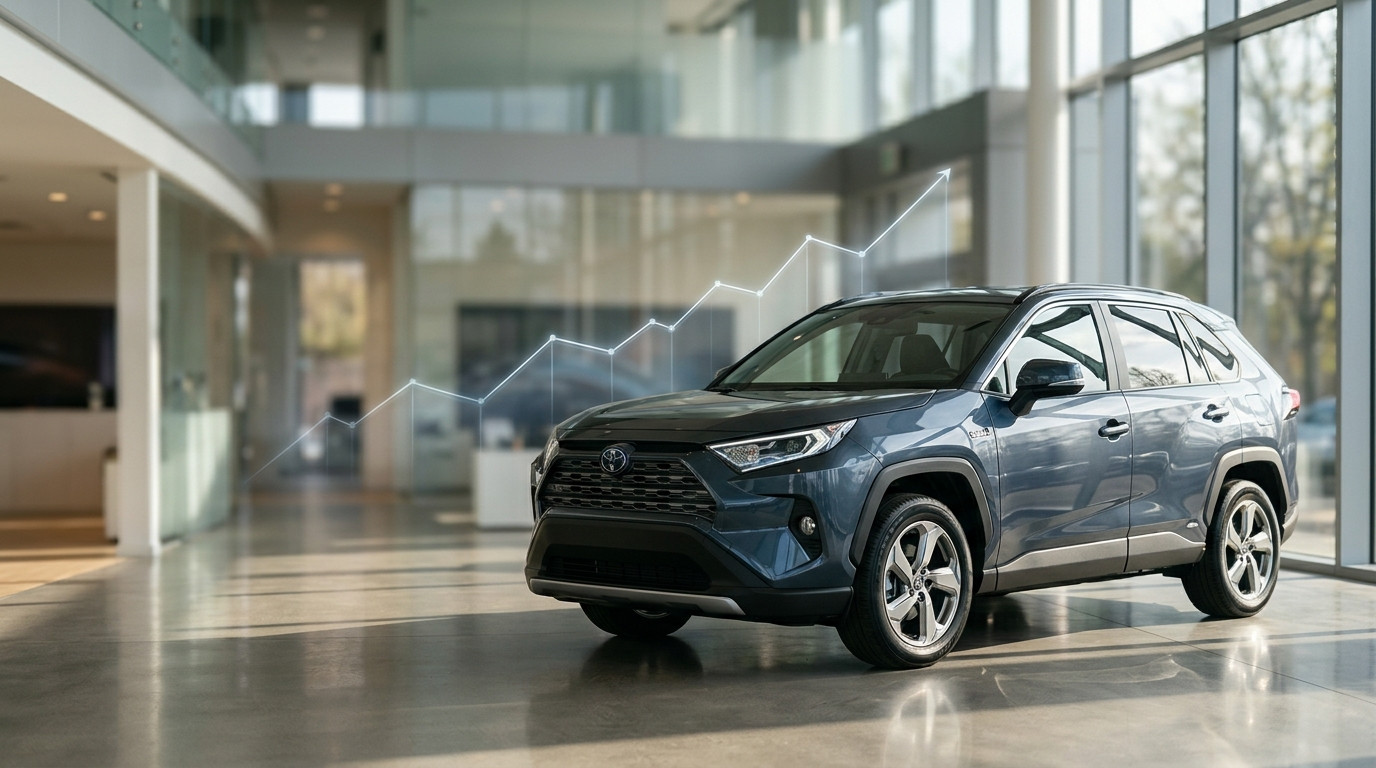
Hybrid vehicle prices have risen sharply in Pakistan after the government increased the General Sales Tax (GST) on hybrid vehicles from 8.5% to 25% in the FY2026-27 budget, while the Auto Policy 2026-31 is yet to be officially announced.
Following the tax increase, Indus Motor Company raised prices of its Toyota Corolla Cross Hybrid variants by up to PKR 1.364 million, with revised prices reaching PKR 10.299 million and PKR 9.849 million. Honda Atlas Cars also increased the price of its HR-V e:HEV by PKR 1.37 million to PKR 10.369 million.
Market sources said several other automakers have temporarily suspended invoicing and deliveries of hybrid vehicles, anticipating possible revisions in the upcoming auto policy or a reduction in the new GST rate.
Industry participants warned that the higher tax could significantly reduce demand for hybrid and plug in hybrid electric vehicles (PHEVs), as buyers now face additional costs of PKR 1.3 million to PKR 1.9 million. They argued that the increase could undermine the government's objective of promoting fuel efficient and environmentally friendly vehicles.
Although the previous Auto Policy 2021-26 expired on June 30, 2026, the government has yet to notify the Auto Policy 2026-31. According to Topline Securities, the new policy, which is expected to introduce a revised incentive framework for the automotive sector, remains pending.
In the FY27 budget, the government extended incentives on imports of completely knocked down (CKD) kits for electric vehicles, including motorcycles, three wheelers, cars, and buses, until June 30, 2027.
Separately, under the National Tariff Policy (NTP) 2025-30, the government has reduced regulatory duty (RD), customs duty, and additional customs duty (ACD) on a wide range of imported goods, including automotive products. Regulatory duties have been lowered across most categories, with the maximum rate reduced to 20% from 50%, while customs duties on imported CKD kits, auto parts, and completely built up (CBU) vehicles have also been cut.
However, analysts noted that these tariff reductions are unlikely to provide significant benefits to local assemblers, as most already import components under concessionary duty regimes with preferential rates.