- May 21, 2026
- Posted by: Tresmark
- Category:
No Comments
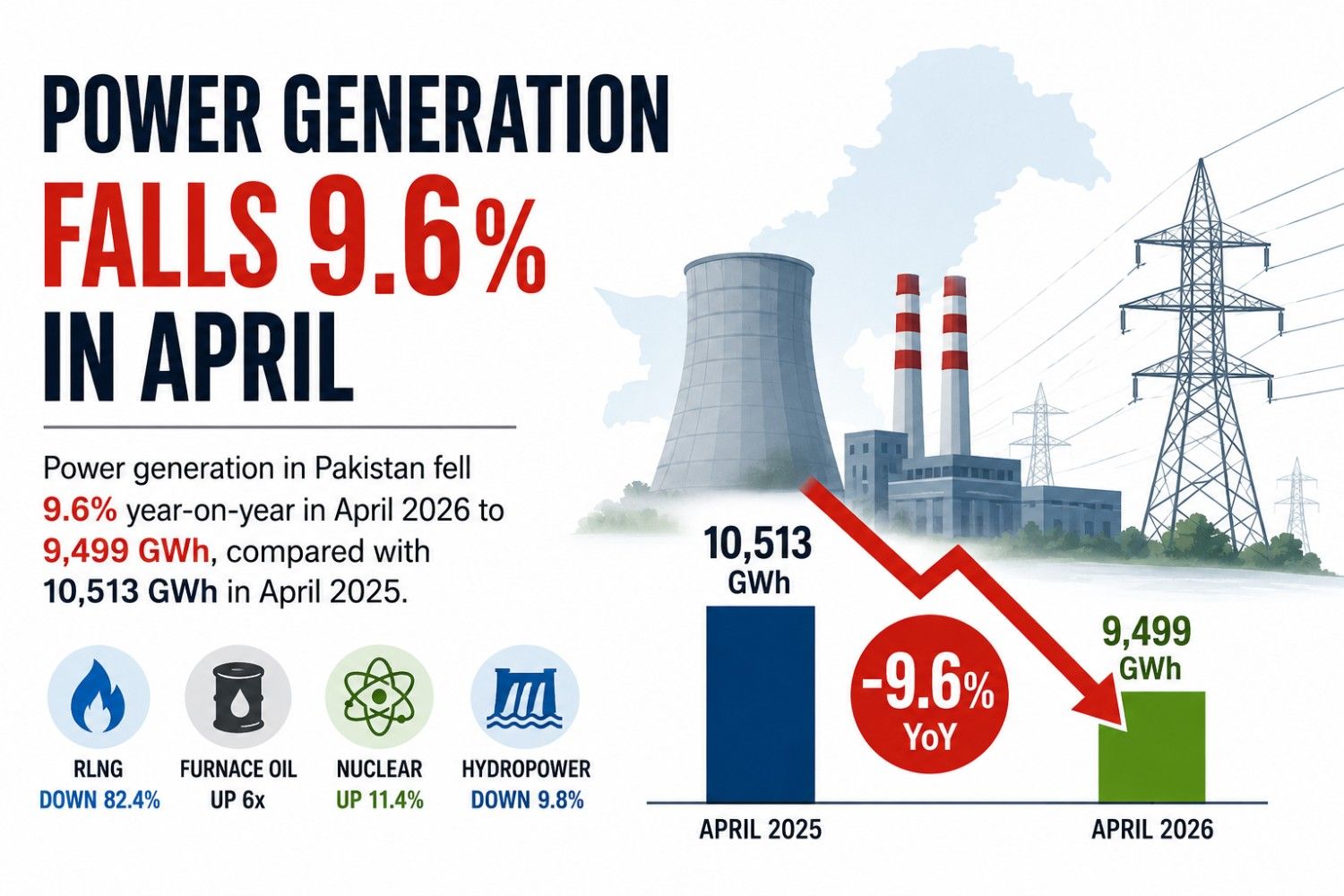
Pakistan Power Generation Falls 9.6% in April
Power generation in Pakistan fell 9.6 per cent year-on-year (YoY) in April 2026 to 9,499 GWh, compared with 10,513 GWh in the same month last year, amid fuel supply disruptions and subdued electricity demand.
According to industry data, total power generation during the first 10 months of FY2026 reached 102,630 GWh, marking a modest 2.0 per cent increase from a year earlier. On a month-on-month (MoM) basis, generation rose 6.3 per cent in April due to seasonal factors.
Despite lower electricity tariffs, improving economic activity and policy measures aimed at increasing grid consumption, generation remained below the reference levels set by the National Electric Power Regulatory Authority (Nepra).
Analysts attributed the shortfall to government austerity measures, increased load shedding linked to RLNG supply disruptions, and the growing adoption of distributed generation, particularly solar power.
The weaker-than-expected generation is likely to result in higher quarterly tariff adjustments (QTAs) in the coming months.
Fuel costs also remained elevated during the month. The adjusted fuel cost for April stood at Rs9.97 per kWh, compared with the reference cost of Rs8.25 per kWh. As a result, power distribution companies (Discos) have sought a positive fuel charges adjustment (FCA) of Rs1.73 per kWh for April, driven by a higher share of furnace oil and high-speed diesel (HSD)-based generation, along with elevated international oil prices.
A major shift in the generation mix was recorded during the month, with RLNG-based generation plunging 82.4 per cent YoY to just 380 GWh due to supply disruptions during the US-Iran conflict. No RLNG cargoes were imported during the month, against six originally scheduled shipments, significantly reducing output from key RLNG-based plants.
To offset the shortfall, furnace oil-based generation surged six-fold YoY to 486 GWh in April. HSD-fired plants were also dispatched for the first time since January 2024, although they accounted for only 0.5 per cent of the overall generation mix.
Meanwhile, imported coal-based generation rose 1.3 times YoY to 1,343 GWh, largely due to higher dispatches from the CPHGC and LEPCL plants. Nuclear generation increased 11.4 per cent to 2,097 GWh, supported by improved output from the K-3 nuclear power plant.
In contrast, hydropower generation declined 9.8 per cent YoY to 2,079 GWh due to lower production from Wapda-operated plants.
Analysts said generation trends between December 2025 and March 2026 have pointed to improving grid stability and a stronger QTA outlook, supported by lower industrial tariffs, incentive packages for industrial and agricultural consumers, and higher levies on captive gas usage. However, the sharp fall in April demand has emerged as a near-term risk to that recovery trajectory.