- January 28, 2026
- Posted by: Tresmark
- Categories:

Treasury decisions are rarely made under ideal conditions. Information arrives at different speeds, assumptions shift during the day, and responsibility often comes before full clarity. For treasury and finance leaders, decision quality depends less on how much data is available and more on whether that information reflects current conditions when a decision is required.
Real-time market data matters because relevance in treasury decision-making is shaped by timing. When information reflects present conditions rather than yesterday’s view, decisions become easier to defend, risks are easier to assess, and internal confidence improves.
Treasury Decisions Are Time-Sensitive by Nature:
Treasury functions operate in environments where conditions can shift within hours. Funding availability, market sentiment, and exposure profiles rarely remain stable throughout the day.
Decisions made in the morning may rely on assumptions that no longer hold by the afternoon.
Even accurate information can influence outcomes differently when it arrives late. Timing affects cost, risk perception, and confidence.
The Difference Between Accurate Data and Timely Data:
Accuracy alone does not guarantee relevance. Information can be correct and still outdated. Treasury decisions require data that is both reliable and current.
Timely information helps decision makers confirm whether existing assumptions still apply at the moment of review. When information lags behind reality, teams may act with confidence that is no longer justified. Fresh context improves interpretation and reduces the risk of misaligned.
Accurate Data vs Real-Time Data
Accurate but Delayed Data
- Correct numbers
- Past market snapshot
- False confidence risk
Accurate + Real-Time Data
- Current conditions
- Live context
- Better decision confidence
How Delayed Information Impacts Treasury Outcomes:
Delayed visibility introduces subtle risk. Exposure assessments may rely on stale inputs, valuations can drift from prevailing conditions, and decisions may shift from deliberate to reactive.
The consequences of timing gaps do not always appear immediately. Over time, small delays can compound into broader misalignment that require corrective action later. Regular access to current information lowers the risk of downstream adjustments and supports steadier treasury oversight.
Real-Time Data and Decision Confidence:
Confidence in treasury decisions comes from clarity, not certainty. When information reflects current conditions, decision makers spend less time revisiting assumptions and more time evaluating options.
Timely information also improves internal alignment across finance, risk, and leadership teams. Decisions feel more controlled when they are grounded in current context rather than retrospective views.
Managing Risk in Fast-Moving Market Conditions:
Market conditions can change intraday, particularly during periods of uncertainty. Assumptions that held earlier may no longer apply later in the day.
Real-time awareness supports risk recognition rather than prediction. Early visibility allows treasury teams to identify shifts as they occur and assess implications calmly. Risk management improves when awareness precedes reaction.
Real-Time Visibility vs Reactive Reporting:
Misalignment often stems from timing differences rather than disagreement. When teams rely on information captured at different points, conversations can drift even when objectives remain aligned.
Shared timing across treasury, finance, and leadership discussions reduces friction. Decisions improve when everyone references the same current context. Alignment strengthens when information timing is consistent rather than fragmented.
Aligning Treasury, Finance, and Leadership Decisions:
Misalignment often arises from timing differences rather than disagreement. When teams rely on information captured at different points, conversations can drift even when objectives remain aligned.
Consistent timing across treasury, finance, and leadership discussions reduces friction. Decisions improve when everyone references the same current context. Alignment strengthens when information timing is shared, not fragmented.
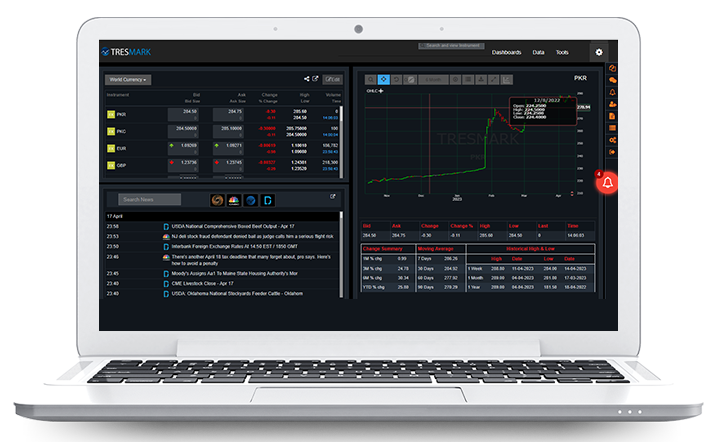
The Only Financial Information Platform You Need
Tresmark is the market leader, the only tool you need for a full picture od the financial markets
When Real-Time Data Matters Most:
Timing becomes especially important in certain situations:
- periods of heightened market uncertainty
- liquidity-sensitive decisions with limited flexibility
- internal review cycles where assumptions are challenged.
During such conditions, access to current information supports clearer judgment and steadier communication, even when no immediate action follows.
For CFOs, maintaining daily oversight becomes easier when market signals, liquidity indicators, and exposure data are available in one place. Platforms that support real-time treasury visibility and decision support help finance leaders stay aligned with current conditions, reduce manual effort, and make decisions with greater confidence throughout the day—especially when timing and accuracy directly affect financial outcomes.
Situations Where Real-Time Data Is Critical
During volatile market conditions, assumptions can shift within hours. Real-time data allows treasury teams to recognize changes early and respond with clarity rather than urgency.
When liquidity flexibility is limited, timing becomes critical. Access to current information reduces pressure and supports more measured funding decisions.
Shared access to up-to-date information ensures leadership, finance, and treasury teams operate from the same context, improving alignment and decision confidence.